
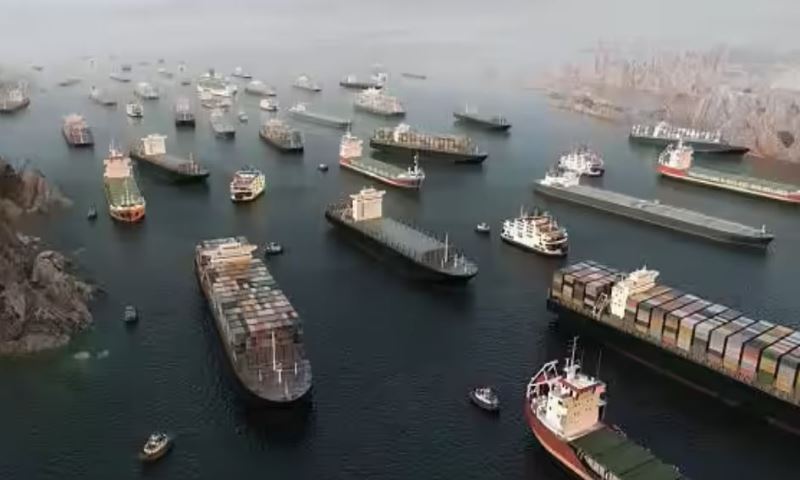
The United States has reported that six merchant vessels were forced to turn back during the early phase of a newly imposed naval blockade targeting Iranian ports, marking a significant escalation in maritime tensions in the region.
According to the U.S. Central Command (CENTCOM), no ships succeeded in breaching the blockade within the first 24 hours of its enforcement. The military said that the vessels complied with instructions to reverse course after approaching restricted waters linked to Iranian port access.
The operation, involving thousands of U.S. personnel, multiple warships, and air support assets, is aimed at restricting maritime traffic to and from Iran as part of broader pressure measures in the region.
Officials said the blockade is being enforced across key approaches in the Gulf of Oman and surrounding maritime routes, with surveillance and interception operations ensuring compliance from commercial shipping.
CENTCOM added that the action applies to vessels of all nationalities attempting to enter or exit Iranian ports, while allowing humanitarian shipments under strict inspection protocols.
The development has raised concerns among global shipping operators and energy markets, given the strategic importance of the region for international trade and oil transit routes.