
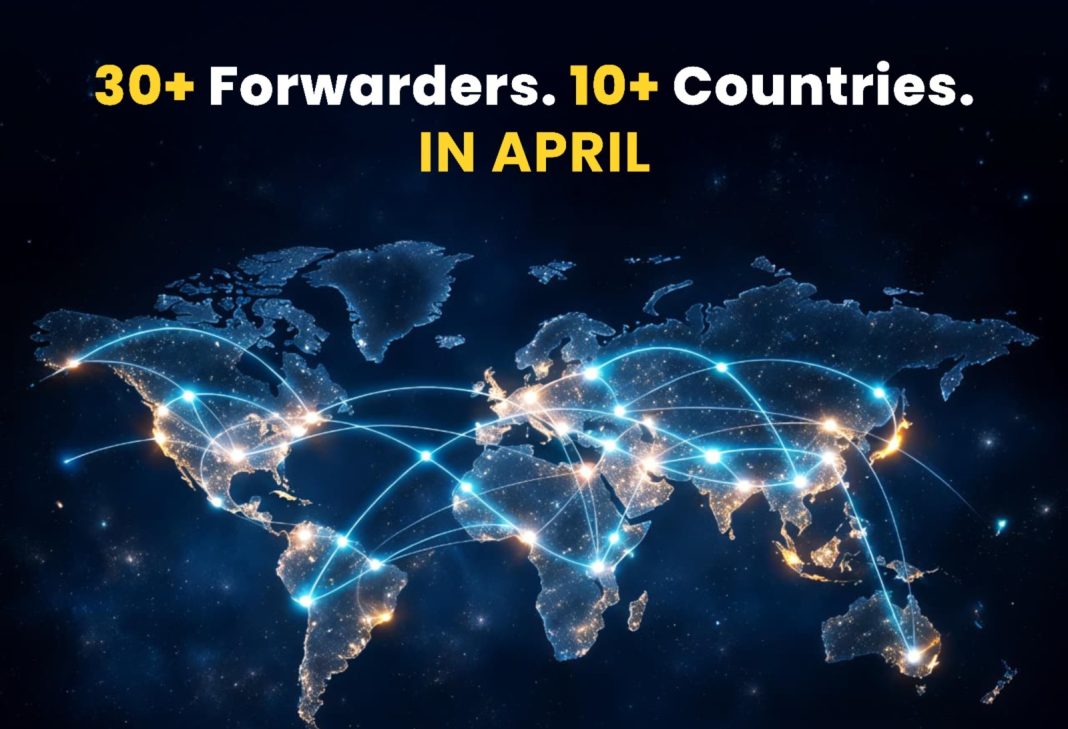
Softlink Global announced that more than 30 freight forwarders spanning over 10 countries have transitioned to its Intelligent Cloud ERP platform during April, bringing over 1,000 users onto a single integrated system.
The adoption covers major logistics markets including India, United Arab Emirates, Hong Kong, Singapore, United Kingdom, Kenya, and the United States, reflecting a growing shift among global freight businesses toward unified digital systems.
According to the company, the transition involved large-scale migration of operational and financial data, standardization of workflows across regions, and simultaneous activation of freight, finance, and compliance modules—all executed without disruption to ongoing operations.
Speaking on the development, Amit Maheshwari, Founder and CEO of Softlink Global, said the move highlights an industry-wide shift toward adopting a single digital backbone to manage end-to-end operations across geographies.
The company noted that freight forwarders are increasingly moving away from fragmented systems in favor of integrated platforms that offer real-time visibility, unified financial control, and faster decision-making, while reducing reliance on manual processes such as emails and spreadsheets.
The rapid adoption also signals growing confidence in ERP transitions within the freight forwarding sector, traditionally slowed by concerns over migration risks, downtime, and multi-country operational complexities.