
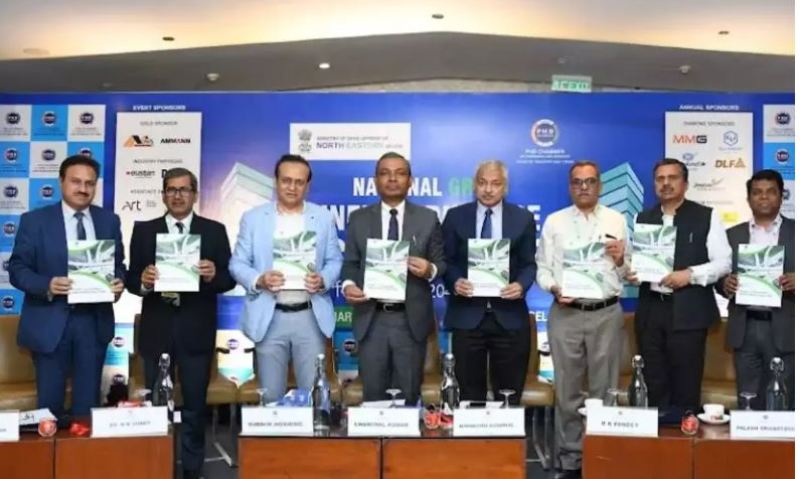
Flash floods in the recent past in Northeastern states of Assam and Sikkim have laid bare the fragility of the geological ecosystem in the region which is now undergoing massive infrastructure development. In a recent summit organised by PHD Chamber of Commerce and Industry, stakeholders outlined the need for development in the region in a green and sustainable way.
In light of recurrent landslides in several states in the region, Chanchal Kumar, Secretary, Ministry of Development of North Eastern Region, highlighted the need for slope stabilization in order to address terrain challenges.
Kumar called for the need for focusing on green infrastructure, advocating for micro solar grid power plants, and maintaining a balance between developmental needs and environmental goals.
Dr. R.M. Dubey, Executive Advisor, Climate Change & Response PTY LTD and former Chairman, Pollution Control Board of Assam, outlined that work on Gramin Sarak Yojna has been commendable in the Northeast and emphasized the need for significant governmental intervention while ensuring environmental safeguards and keeping the United Nations’ mandated Sustainable Development Goals in mind.
As per R K Pandey, Former Member (Projects) at National Highways Authority of India, there has been a shift in the approach towards concessional contractors, wherein in projects, implementation of new specifications like recycling and depth reclamation have been made. These initiatives have resulted in a notable reduction in carbon dioxide emissions, according to him.
Sudhir Hoshing, Chair, PHD Chamber of Commerce and Industry’s Infrastructure Development Ports, Shipping, Roads and Waterways Committee, outlined that sustainable road construction is essential to ensure that carbon dioxide emissions are under control.
Kumar highlighted the massive infrastructure development in the region, which includes expansion of roads from 10,900 km to over 16,000 km, the addition of 1,900 km of railway tracks, and the increase in airports from nine to 17, serving more than 65 airlines, as well as inland waterways having been expanded from one to 20 in the last nine years.