
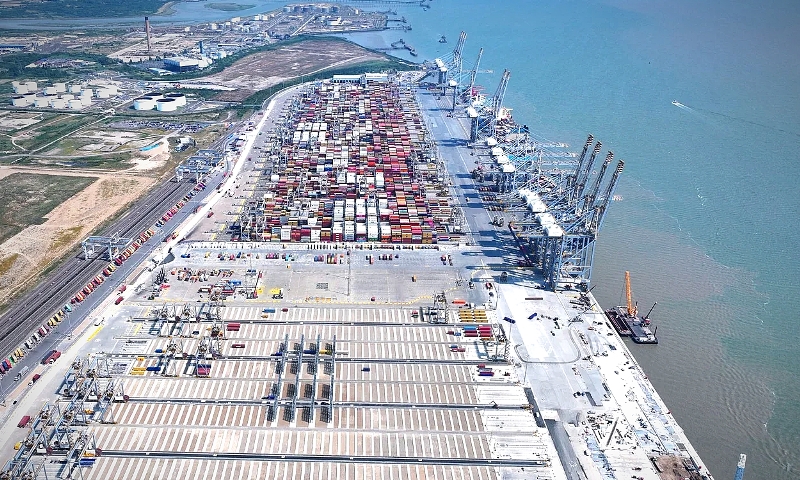
Thames Freeport has begun testing the use of artificial intelligence (AI) and 5G technologies in real-time port operations, marking a significant step toward building smarter and more efficient logistics hubs.
The pilot programme is being conducted across key sites within the freeport zone, focusing on improving cargo handling, traffic management, and overall operational visibility. By leveraging AI-driven analytics and high-speed 5G connectivity, operators aim to enhance decision-making and reduce turnaround times for vessels and cargo.
Officials said the integration of these technologies will enable real-time monitoring of equipment, predictive maintenance, and automated coordination between different parts of the supply chain. This is expected to minimise delays, optimise resource utilisation, and improve safety standards.
The initiative also seeks to support the UK’s broader digital transformation goals in the maritime and logistics sectors. Advanced connectivity is seen as a critical enabler for deploying autonomous systems, smart sensors, and data-driven logistics solutions.
Industry stakeholders view the trial as a key milestone in demonstrating how next-generation technologies can be applied in complex port environments. If successful, the model could be scaled across other ports to drive efficiency and competitiveness.
With global trade becoming increasingly digitised, Thames Freeport’s move underscores the growing importance of innovation in shaping the future of port operations and supply chain management.