
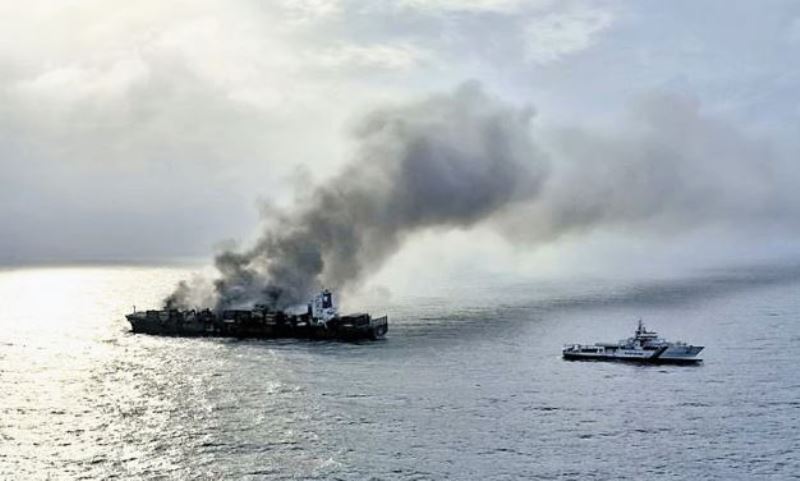
Recent UK Maritime Trade Operations (UKMTO) reports have confirmed three additional attacks on tankers in the Strait of Hormuz, adding to growing concerns over maritime security in the strategically important waterway. The incidents occurred on September 29, but details were released only on September 30.
UKMTO issued three separate warnings covering the incidents. The delayed reporting highlights the difficulty of obtaining timely information on attacks as commercial vessels continue to operate under heightened security risks in the region.
The latest reports involve attacks on commercial tankers operating in and around the Strait of Hormuz, a critical route for global energy shipments. A separate maritime security report said four vessels were struck across September 28 and 29, indicating a broader series of incidents within a 24-hour period.
The attacks come as shipping activity through Hormuz remains below normal levels. Reuters reported last week that only 10 commodity vessels transited the strait on September 23, compared with a 10-day average of 17. Before the conflict began, the waterway typically handled around 125 large commercial vessels a day.
Despite the security risks, some energy shipping has resumed. Qatar-linked LNG carriers have recently increased visible movements through the strait, with vessels carrying cargoes to destinations including India, Pakistan and China.
At the same time, Gulf oil exporters are increasingly relying on ship-to-ship transfers and alternative logistics arrangements to maintain exports. Saudi Arabia, in particular, has increased crude movements through Hormuz following disruptions to its Red Sea export route, contributing to congestion and higher tanker demand in the region.
The latest tanker attacks are therefore adding another layer of uncertainty for shipowners, charterers, insurers and energy traders, as operators assess the security risks and potential delays associated with voyages through the Strait of Hormuz.