
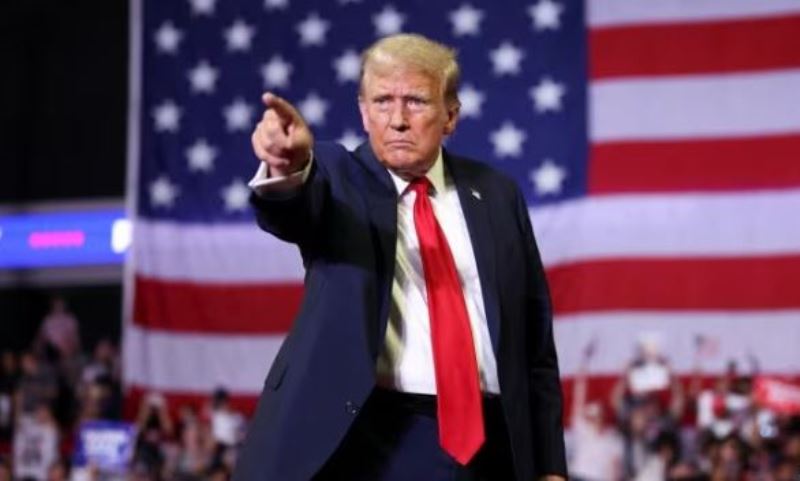
US President Donald Trump has threatened military action against Oman as Muscat works with Iran on an arrangement aimed at managing commercial shipping through the strategically vital Strait of Hormuz. The warning has added another layer of tension to already stalled US-Iran negotiations over the waterway.
Iran and Oman are reportedly close to finalising a framework for maritime traffic through the strait. Tehran says the two countries have reached an understanding on the route and are working on a joint statement covering the proposed arrangements.
The development has angered Washington, which has been demanding the full reopening of the Strait of Hormuz. Trump has warned Oman against interfering with US efforts to secure freedom of navigation and has indicated that Washington could take military action if Muscat obstructs those efforts.
The dispute comes as the 60-day period set for US-Iran negotiations has expired without a broader agreement. Iran continues to maintain that the waterway remains closed, while Trump has claimed that the strait is open and safe for shipping.
For the shipping industry, uncertainty around Hormuz remains a major concern. The waterway is a critical route for global energy supplies, and continued restrictions have sharply reduced vessel movements. On August 18, only six commodity vessels were recorded passing through the strait, according to Kpler data cited by Reuters, compared with nine the previous day.
Oman occupies a strategically important position alongside the Strait of Hormuz and has traditionally played a mediating role in regional diplomacy. Its discussions with Iran are therefore being closely watched by shipping companies, energy traders and governments seeking a safe and predictable reopening of the route.
A successful Iran-Oman arrangement could provide a mechanism for restoring commercial traffic and reducing pressure on global supply chains. However, the latest confrontation between Washington and Muscat highlights the significant geopolitical obstacles that remain before shipping through the Strait of Hormuz can return to normal levels.
For carriers and cargo owners, prolonged uncertainty could continue to affect vessel routing, insurance costs, transit times and energy prices, particularly if the disruption extends into the coming weeks.