
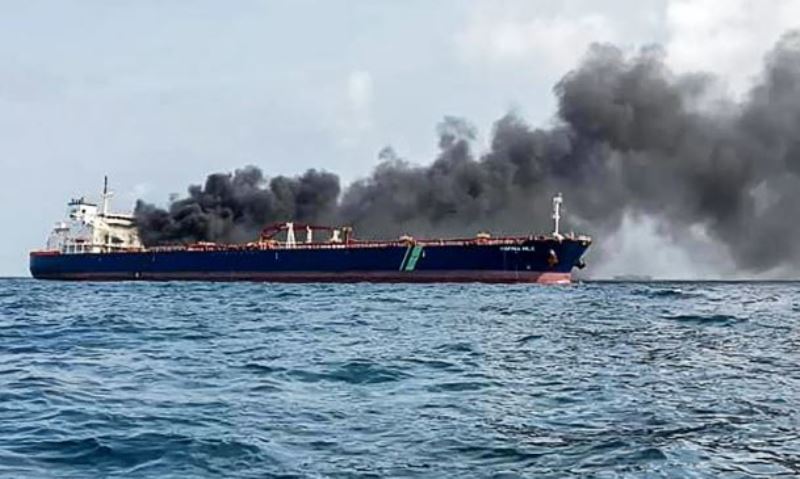
Two more oil tankers have been struck by unidentified projectiles in separate incidents near the Strait of Hormuz and the northern Persian Gulf, raising fresh concerns over maritime security and the safety of commercial shipping across the region.
According to the United Kingdom Maritime Trade Operations (UKMTO), one tanker was hit approximately 11 nautical miles west of Bukha, Oman, at 0145 UTC on October 21. The impact triggered a fire onboard, which was subsequently extinguished. The vessel remained at anchor, with all crew members reported safe and no environmental damage recorded.
In a separate incident on October 20, another tanker was struck by an unidentified projectile approximately 30 nautical miles southeast of Al Faw, Iraq. The vessel’s master reported the incident to UKMTO, which confirmed that all crew members were safe and no damage or pollution had been reported. Neither vessel has been publicly identified, and responsibility for the attacks remains unconfirmed.
Maritime Threat Extends Beyond Strait of Hormuz
The latest incidents highlight the expanding geographical scope of attacks on commercial shipping. While the Strait of Hormuz remains a major security flashpoint, vessels operating elsewhere in the Persian Gulf and surrounding waters are also facing increasing risks.
The Joint Maritime Information Center (JMIC) has maintained a severe threat assessment for the Strait of Hormuz and warned that deliberate attacks on commercial vessels remain highly likely. It has also raised the threat level for the wider Persian Gulf to substantial, citing the growing pattern of incidents and electronic navigation interference.
Earlier in October, attacks were reported near Saudi Arabia and Qatar, while a tugboat was struck near the United Arab Emirates. The series of incidents has intensified concerns among shipowners, insurers and maritime operators over vessel safety and the reliability of key Gulf shipping routes.
Shipping and Energy Supply Chains Under Pressure
The Persian Gulf is a critical corridor for global oil, liquefied natural gas and other energy shipments. Continued attacks could increase insurance premiums, raise vessel operating costs and prompt shipowners to reconsider transit plans.
Heightened security risks may also lead to delays, changes in vessel routing and additional precautions for ships waiting at regional anchorages. These disruptions could affect energy deliveries and increase uncertainty for international traders and cargo owners.
Shipowners Face Difficult Routing Decisions
Shipping companies are being forced to balance the need to maintain cargo movements against the risks to vessels and crews. Maritime security advisories urge operators to monitor official warnings, review voyage risk assessments and maintain close contact with relevant authorities.
With the latest two incidents adding to a growing list of attacks, the security situation across the Persian Gulf remains volatile. A sustained increase in incidents could further disrupt commercial shipping and place additional pressure on global energy supply chains.