
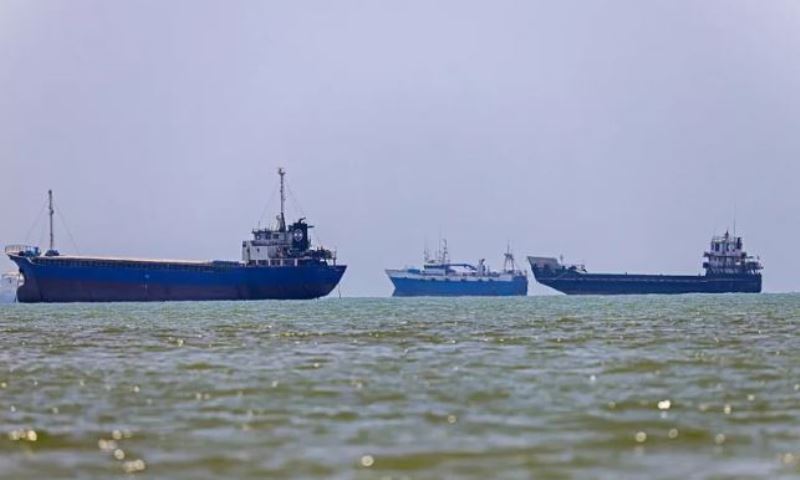
The United States and Iran have agreed to suspend military strikes and resume technical negotiations in Doha on Tuesday in an effort to resolve tensions over navigation through the Strait of Hormuz, following days of military escalation that threatened to undermine a fragile ceasefire.
The breakthrough comes after a series of retaliatory attacks around the strategically vital waterway. The United States launched strikes on Iranian military targets, accusing Tehran of violating the ceasefire by targeting commercial shipping. Iran responded with ballistic missile and drone attacks on US military installations in Bahrain and Kuwait, raising fears of a wider regional conflict.
According to reports, both sides have now agreed to halt military operations and continue diplomatic engagement in Qatar’s capital.
“We decided to stop all the kinetic activity,” a senior US official was quoted as saying, referring to the suspension of military strikes and related operations. Another US official said both countries would stand down “for now,” adding that commercial vessels would be able to transit the Strait of Hormuz freely while technical discussions continue.
The latest tensions stem from differing interpretations of a memorandum of understanding (MoU) signed earlier this month to end hostilities. The dispute centres on Article 5 of the agreement, which governs navigation through the Strait of Hormuz. Under the MoU, Iran committed to making its best efforts to ensure the safe passage of commercial vessels, while the United States agreed to lift its blockade of Iranian ports.
During negotiations held in Switzerland last week, the US delegation, led by Vice President JD Vance, also agreed to establish a direct communication hotline between the US military and Iran’s Islamic Revolutionary Guard Corps (IRGC) to coordinate shipping movements through the Strait. However, US officials said the communication channel had yet to become operational as Iran continued to insist that vessels coordinate their transit with Tehran.
The technical talks were originally intended to focus on Iran’s nuclear programme in Switzerland. However, the recent military escalation prompted both a change in venue to Doha and a shift in focus toward resolving the Strait of Hormuz dispute.
Iran had earlier cancelled technical talks scheduled for Sunday, citing recent US military actions and alleging that Washington had failed to fulfil key commitments under the memorandum. Speaking to Iranian state television, Mehdi Fazaeili, a member of the Office of Preservation and Publication of the Works of Iran’s Supreme Leader, said one of the reasons for suspending negotiations was the lack of access to Iranian funds that were expected to be unfrozen under the agreement.
The Strait of Hormuz remains one of the world’s most critical maritime chokepoints, handling a significant share of global oil and LNG exports. Shipping markets will closely monitor the outcome of the Doha negotiations, as any sustained reduction in tensions would help restore confidence in commercial navigation through the region.