
The US Department of Transportation has announced a US$2.3 billion investment in freight and passenger rail infrastructure, covering 105 projects across 45 states and the District of Columbia. The programme aims to improve rail safety, modernise infrastructure and strengthen the efficiency of the country’s rail network.
Announced on October 19, 2026, the funding will be distributed through the Federal Railroad Administration’s Consolidated Rail Infrastructure and Safety Improvements (CRISI) grant programme. The projects are expected to deliver improvements across more than 2,000 miles of railway track.
State, local and private-sector partners are expected to contribute an additional US$1.9 billion, bringing the total investment in the selected projects to more than US$4.2 billion.
Freight Rail and Port Connectivity
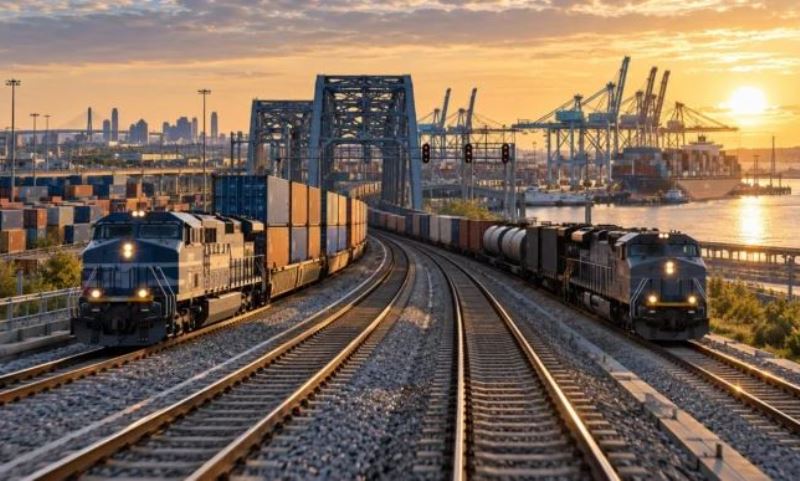
Several projects will focus on freight corridors, short-line railways, bridges and port connections. These improvements are intended to strengthen cargo movement, reduce operational bottlenecks and improve the reliability of freight services.
Key allocations include:
- Arkansas & Missouri Railroad: US$33.6 million for track rehabilitation and infrastructure improvements between Fort Smith, Arkansas, and Monett, Missouri.
- Wheeling & Lake Erie Railway: US$43.5 million to modernise the Toledo Swing Bridge in Ohio and improve rail capacity.
- Maine Department of Transportation: US$37 million to rehabilitate approximately 90 miles of railway in northern Maine.
- Aberdeen Carolina & Western Railway: US$20 million for track, bridge and crossing upgrades in North Carolina.
- Texas City Terminal Railway: US$30 million for rail-yard rehabilitation, expansion and improvements to the port entrance gate.
Another US$218 million has been allocated to Wisconsin’s Hiawatha West project, which includes track, bridge, crossing and station improvements to support expanded passenger rail services.
Focus on Safety and Efficiency
The investment also targets railway safety, infrastructure resilience and improved operating performance. Upgraded tracks, bridges, signalling systems and level crossings are expected to help reduce disruptions and support more reliable rail operations.
For freight operators, improved rail infrastructure and port connections can strengthen intermodal transport, enabling smoother movement of containers and other cargo between inland markets and seaports.
The nationwide programme represents a significant investment in modernising US rail infrastructure, with the combined federal and non-federal funding expected to support freight transportation, passenger connectivity and regional economic activity.