
The West Bengal government is exploring land pooling and the development of more industrial parks to make large tracts of land available for industries, while avoiding direct land acquisition—a politically sensitive issue in the state following the Singur and Nandigram agitations.
Subrata Gupta, adviser to Chief Minister Suvendu Adhikari, said land pooling is among the options being evaluated to facilitate land aggregation, alongside a greater focus on developing industrial parks.
“Land pooling is one of the options that the state is evaluating for land aggregation, apart from giving greater impetus to industrial parks,” Gupta told PTI. He said the objective is to make larger parcels of land available to industry while addressing the challenges arising from fragmented land holdings.
Under a land pooling model, fragmented private land parcels are brought together for planned development instead of being acquired outright by the government. Landowners typically receive developed plots or other benefits in return for contributing their land.
The approach could allow West Bengal to assemble large, contiguous land parcels while limiting direct government involvement in transactions with individual landowners. However, Gupta said that if the state decides to implement land pooling, appropriate legislation would have to be introduced.
Industrial parks seen as another solution
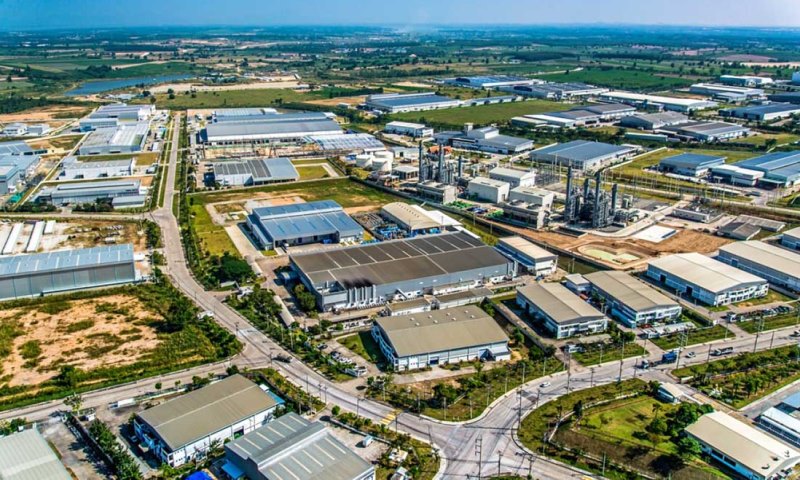
The state is also looking to give greater impetus to industrial parks, where private developers can aggregate land and create ready-to-use industrial plots along with common infrastructure.
Such parks could help companies that require large contiguous parcels of land and may also address restrictions on land holdings that individual industrial units face.
West Bengal’s focus on alternative land aggregation models assumes particular importance given the political sensitivity surrounding land acquisition in the state. Direct acquisition of agricultural land for private industrial projects has previously triggered major protests and contributed to significant political consequences.
Land pooling model used in several states
One of the largest examples of land pooling in India is Amaravati in Andhra Pradesh, where around 33,000 acres were pooled from approximately 29,000 farmers for the development of the planned capital.
Similar land pooling, land readjustment and town-planning models have also been implemented in states including Gujarat, Maharashtra, Punjab and Kerala.
The model can create large contiguous land parcels and reduce upfront acquisition costs. However, its effectiveness depends on factors such as clear land titles and records, transparent rules for distributing benefits, defined implementation timelines, stakeholder participation and an effective grievance-redress mechanism.
A policy brief by the Indian Institute for Human Settlements describes land pooling as an alternative to conventional land acquisition, where parcels owned by multiple individuals are aggregated and redeveloped, with landowners receiving a share of the developed land or other benefits based on predetermined criteria.
Government examining land-law reforms
The West Bengal government is simultaneously examining changes to land laws governing land holding and utilisation.
Gupta said repealing the Urban Land (Ceiling and Regulation) Act would not by itself provide a solution for industry, as industrial units generally do not fall under the urban land ceiling framework.
“What we need is reform of land laws, which are stringent on holding and utilisation,” Gupta said, adding that large industrial projects would require laws enabling companies to hold and use the required quantum of land for their operations.
The state is also examining closed industrial units as a potential source of land for new industrial projects. Reusing such land could help meet industrial requirements without opening up fresh acquisition of agricultural land.
In addition, the government is working on reforms concerning bargadars, or sharecroppers, who are no longer engaged in farming but continue to have legal rights over land.
The proposed combination of land pooling, industrial parks, reuse of closed industrial land and land-law reforms could provide West Bengal with an alternative framework for attracting large industrial investments while reducing the social and political challenges associated with conventional land acquisition.