
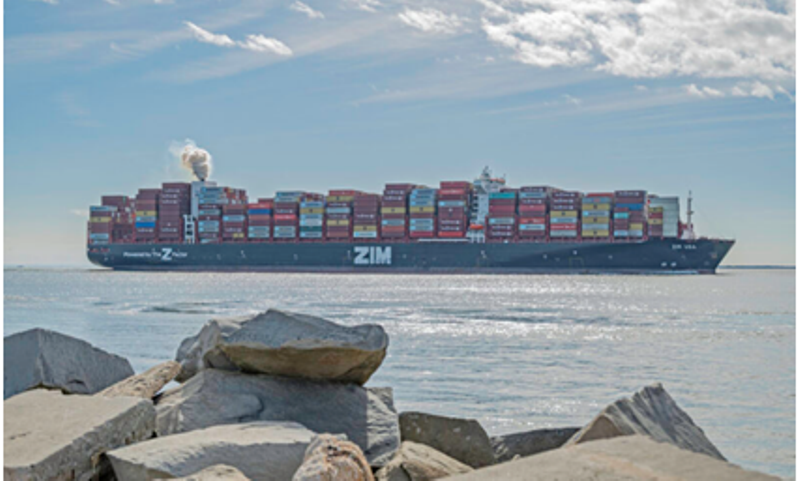
Israel’s ports have welcomed a significant addition to global shipping capacity with the arrival of the eco-friendly container vessel ZIM Kilimanjaro, marking a milestone in sustainable maritime operations.
Stretching an impressive 366 meters—longer than three football fields—the vessel has a capacity of approximately 15,000 containers, placing it among the larger ships in ZIM’s fleet. Built using a volume of steel equivalent to more than five Eiffel Towers, the ship underscores both engineering scale and modern shipbuilding capabilities.
Powered by liquefied natural gas (LNG), ZIM Kilimanjaro reflects the company’s ongoing push toward reducing emissions and adopting cleaner fuel alternatives under its “Z Factor” initiative. The deployment of LNG-fueled vessels is part of ZIM’s broader strategy to align with global environmental standards while maintaining operational efficiency.
The vessel’s arrival comes at a time of rising demand and increasing logistical challenges, reinforcing ZIM’s focus on reliability and resilience in supply chain operations. By integrating sustainability with performance, the company aims to ensure the steady movement of essential goods while minimizing environmental impact.
Industry observers note that the induction of such next-generation vessels highlights a growing shift within the shipping sector toward greener technologies without compromising scale or service efficiency.