
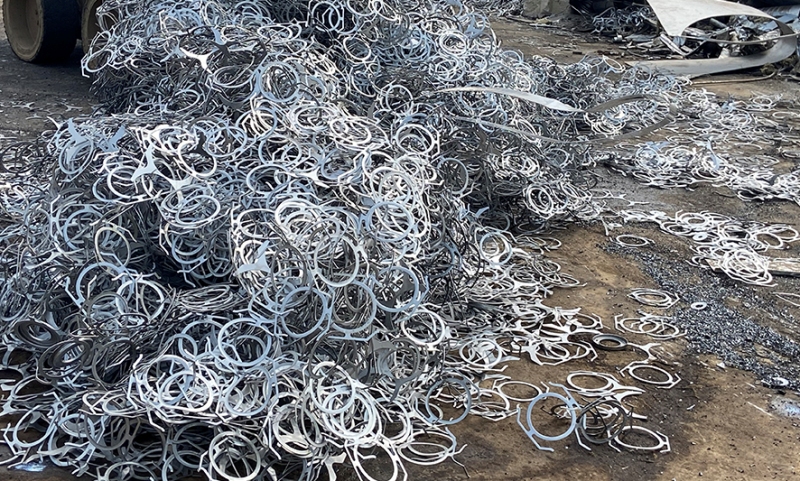
The aluminium industry has asked the government to increase the import duty on primary, downstream aluminium and has also sought rise in customs duty on aluminium scrap to put curbs on low-quality scrap inflow into the country.
The development assumes significance as the surge in primary aluminium and low-grade scrap imports, particularly from countries with excess capacity like China, has disrupted the domestic market and deterred investment in local production.
In its pre-Budget recommendation to the government, the Aluminium Association of India (AAI) suggested raising import duty on primary aluminium to 10 per cent from 7.5 per cent , downstream aluminium to 12.5 per cent from 7.5 per cent, and raising aluminium scrap duties to 7.5-10 per cent from 2.5 per cent.
Meanwhile, Federation of Indian Mineral Industries (FIMI) has also asked the government to raise primary/downstream aluminium import duties to 12.5 per cent, along with increasing aluminium scrap duties to 7.5 per cent or higher from 2.5 per cent.
High duties on essential raw materials have created an inverted duty structure, adding costs for domestic aluminium producers, the industry said.
To alleviate this, the industry has recommended reducing the customs duty on several materials.
By rationalising these input tariffs, the industry could reduce production costs by up to 17 per cent, bringing Indian aluminium production closer to global cost standards and enhancing its competitiveness.
The aluminium industry is also impacted by high energy costs due to the GST compensation cess of Rs 400 per metric tonne on coal.
FIMI has recommended removing this cess or allowing it as an offset against green compliance costs, which would reduce operational costs and support the industry’s shift towards sustainable practices.
India holds a strategic advantage with the world’s seventh-largest bauxite reserves and fifth-largest coal reserves.
Yet, despite India’s per capita aluminium consumption remaining low at 3 kg per annum, well below the global average of 12 kg. The industry faces significant hurdles in attracting fresh investments despite the domestic demand projected to reach 10 million tonnes per annum (MTPA) by 2030.
While the industry has already invested over Rs 1.5 lakh crore to expand capacity to 4.2 MTPA, an additional Rs 3 lakh crore will be required over the next six years that will help meet rising demand.