
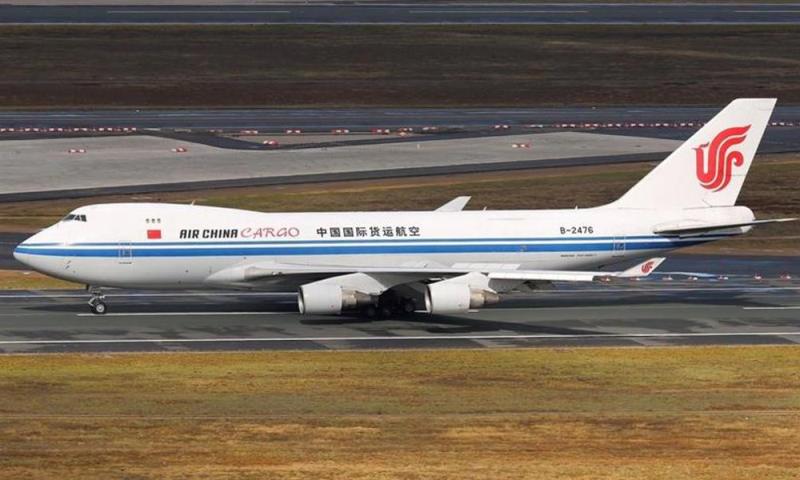
Air China Cargo is planning a ¥12bn ($1.65bn) IPO on the Shenzhen Stock Exchange to expand its freighter fleet, among other plans.
The carrier’s cargo arm issued its listing prospectus on Wednesday, detailing plans to use ¥8.5bn ($1.17bn) of the proceeds to buy freighters and spare engines and to facilitate digitalisation. The remainder will be used as working capital.
Air China Cargo, which hass 12 freighters – nine B777Fs and three B747-400Fs – also carries belly cargo in all Air China passenger aircraft. The company has appointed CITIC Securities to oversee plans to issue 1.32bn shares prior to any over-allotment.
Established in 2003, Beijing-headquartered Air China Cargo’s network covers six continents , with flights from China to Frankfurt, Amsterdam, Liege, New York, Chicago, Los Angeles and elsewhere in Asia.
Currently, the Chinese government, through China National Aviation Holding Corp, is Air China Cargo’s largest shareholder, with a 45% stake, followed by Alibaba’s logistics arm, Cainiao, and Cathay Pacific Cargo, with stakes of 15% and 12.24%, respectively.
Air China Cargo disclosed in its prospectus that, after its net profit of ¥4.34bn ($681.32m) in 2021, due to increased demand amid the Covid-19 pandemic, its earnings fell to ¥3.11bn and ¥1.15bn ($162.43m) in 2022 and 2023, respectively, as air freight levels normalised.
It said: “As the air cargo market gradually normalised, the company’s service fees and cargo volumes have also decreased accordingly, resulting in declining revenue. The reduced profits are also due to increases in costs such as fuel, labour, depreciation and take-off and landing costs.”
Air China Cargo added that its base is in Beijing, which has a substantially lower cargo volume than Shanghai Pudong International Airport. While smartphone makers Apple, Huawei and OPPO were its main customers during the pandemic, the return to normality in ocean shipping from 2022 ate away at demand for costlier air freight.
Air China Cargo remains optimistic, however, that rising e-commerce sales will result in higher earnings, going forward. It said: “The growth of China’s manufacturing industry, e-commerce and cold chain logistics markets has resulted in a generally upward trend in air freight and mail.”