
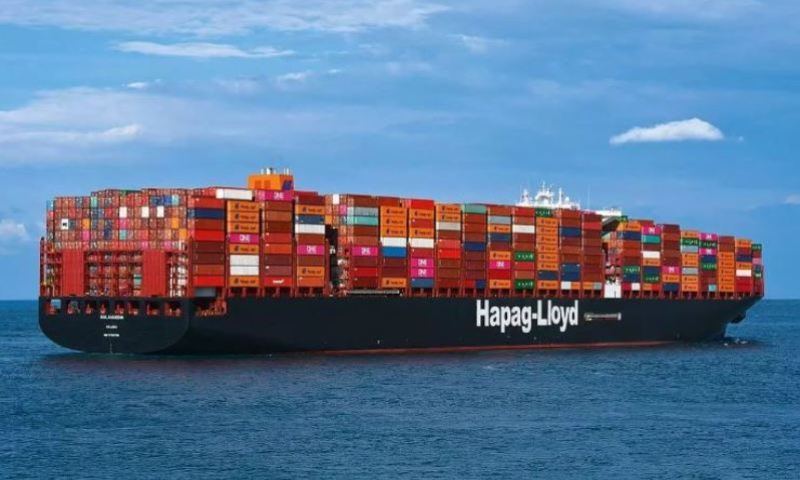
The Maersk–Hapag-Lloyd ME11 container service has resumed its full Suez Canal loop, restoring the traditional routing between Asia, the Middle East, and Europe after a period of disruption and network adjustments.
The return to a complete Suez rotation is expected to shorten transit times and improve schedule reliability for shippers moving cargo across key east–west trade lanes. The ME11 service is a core offering on the Asia–Middle East–Europe corridor, linking major load ports with critical consumption and transshipment hubs.
Shipping industry sources said the decision reflects improving operational confidence on the Suez route, as carriers gradually rebalance networks that had been altered due to security concerns, congestion, and cost pressures. The reinstated loop also helps optimise vessel utilisation and reduces the need for longer alternative routings.
For customers, the move is likely to provide more predictable sailing schedules and lower overall logistics complexity compared with extended diversions. Freight forwarders noted that the return of full Suez services could also ease capacity tightness on certain lanes.
Maersk and Hapag-Lloyd continue to monitor regional conditions closely, with both carriers emphasising flexibility and contingency planning as they adjust service networks in response to evolving geopolitical and market dynamics.