
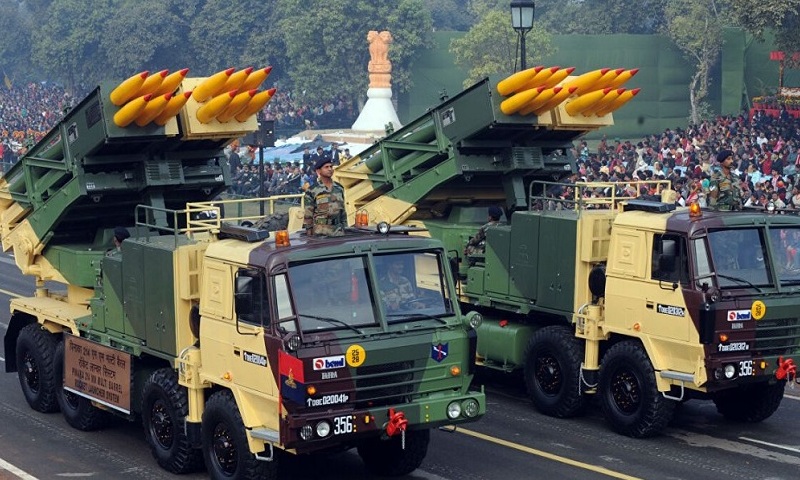
Rajnath Singh said India is on course to emerge as a major force in the global defence export market over the next 25 to 30 years, underlining the country’s growing manufacturing capabilities and focus on self-reliance in the sector.
Speaking at an industry event, Singh highlighted the rapid expansion of India’s domestic defence production ecosystem, driven by government initiatives such as ‘Make in India’ and increased participation from private industry. He noted that India’s defence exports have witnessed significant growth in recent years, with locally manufactured equipment and systems being supplied to several countries.
The Defence Minister said the government is working to strengthen indigenous design, innovation and advanced manufacturing to reduce import dependence and enhance export competitiveness. He added that India is steadily building capabilities across defence platforms, including naval systems, aerospace equipment, missiles, electronics and armoured vehicles.
Singh also stressed the importance of collaboration between government agencies, defence public sector undertakings and private companies to position India as a reliable global defence supplier. Industry experts believe rising investments, policy support and expanding international partnerships could further boost the country’s defence export potential in the coming decades.