
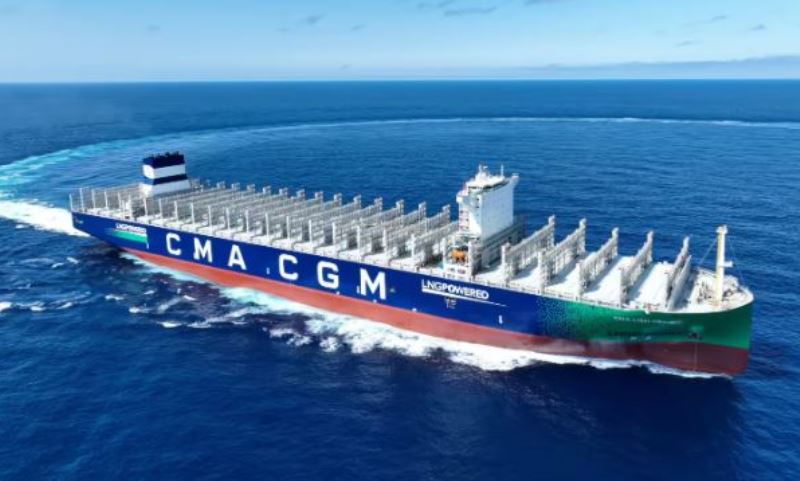
CMA CGM has christened its first 24,000 TEU LNG-powered megaship, marking a significant milestone in the company’s fleet modernisation and decarbonisation strategy. The new flagship strengthens the carrier’s commitment to deploying larger, more fuel-efficient vessels while reducing the environmental impact of global container shipping.
Powered by liquefied natural gas (LNG), the vessel is designed to deliver lower greenhouse gas emissions and significantly reduce sulphur oxide, nitrogen oxide, and particulate matter emissions compared with conventionally fuelled ships. The addition of the megaship reflects CMA CGM’s continued investment in alternative-fuel technologies as the maritime industry accelerates its transition toward cleaner operations.
With a capacity of 24,000 twenty-foot equivalent units (TEUs), the vessel will serve major east-west trade routes, enabling the transport of larger cargo volumes while improving operational efficiency and economies of scale. The deployment is expected to enhance network reliability and support growing global trade demand.
The christening of the new flagship underscores CMA CGM’s broader sustainability roadmap, which includes expanding its fleet of low-emission vessels and investing in future energy solutions. Industry observers view the milestone as another step towards achieving the shipping sector’s long-term climate objectives while maintaining efficient and reliable container transport services.