
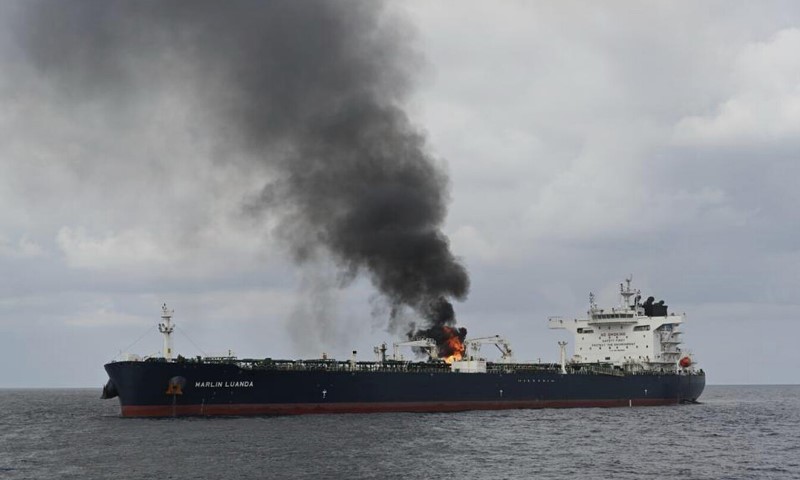
Two supertankers carrying Saudi crude oil were struck by unknown projectiles while sailing outbound through the Strait of Hormuz, marking a further escalation of maritime security risks in the strategically vital waterway. The incidents occurred within minutes of each other late Monday, according to shipping intelligence and tracking firms Marisks and Kpler.
The vessels involved were the Saudi-flagged VLCC Sidr and the Liberian-flagged Senegal Prosperity. Both tankers had loaded around 2 million barrels of Saudi crude each at the Juaymah terminal the previous week.
Marisks described the near-simultaneous attacks as a further deterioration in the security environment along the Omani corridor. The Sidr was reportedly struck about 16.6 nautical miles northeast of Khasab, Oman, while the Senegal Prosperity was hit by three projectiles approximately 17 nautical miles east of Khasab. All crew members were reported safe.
The UK Maritime Trade Operations agency also reported projectiles striking a tanker in the same area, apparently referring to one of the incidents. No group has claimed responsibility for the attacks, and the operators of the two vessels had not immediately commented.
The attacks come amid continued uncertainty over the status of the Strait of Hormuz, a critical energy corridor through which a significant share of global oil and LNG shipments normally pass. Iranian and US blockades have sharply reduced energy movements through the waterway, while diplomatic efforts involving Qatar and Oman to restore normal traffic have so far produced limited results.
The latest incidents are likely to add to concerns among shipowners, charterers and energy traders about the risks of navigating the region. Vessel operators may face higher insurance costs, longer routing decisions and additional security requirements if attacks or threats continue.
The disruption is already affecting maritime traffic. Preliminary Kpler data showed only five vessels transited the Strait of Hormuz on Monday, well below the recent 10-day average of about 14 vessels, with no liquid tankers recorded among the transits.
Oil markets have also reacted to the renewed security concerns. Crude prices gained as traders assessed the potential impact of further disruptions to Gulf energy exports, particularly amid renewed military tensions between the United States and Iran.
For Saudi Arabia, the attacks are particularly significant because they occurred after Saudi Aramco resumed oil loadings and sales from inside the Strait of Hormuz in August. Continued attacks could complicate efforts to restore regular export flows through the waterway.
The incidents involving Sidr and Senegal Prosperity therefore add another layer of uncertainty for global shipping and energy markets. If maritime security conditions deteriorate further, tanker operators could increasingly reconsider transit through the Strait, potentially putting additional pressure on global oil supply chains and freight markets.