
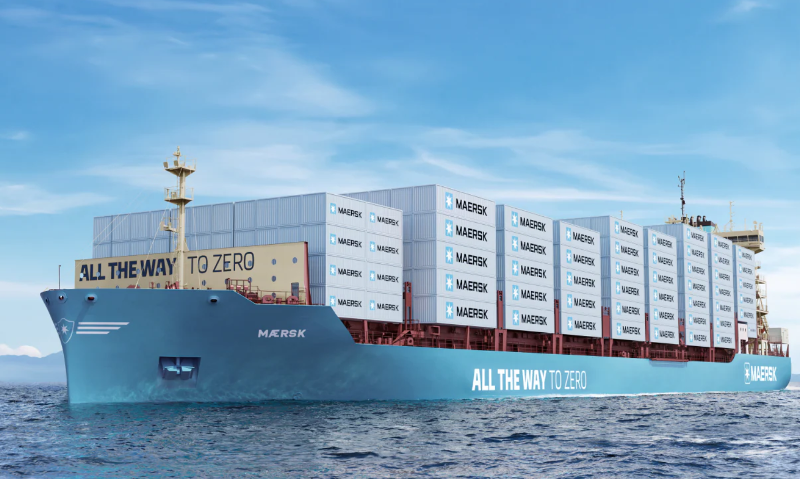
Maersk has announced revisions to its export and import service fees for shipments to and from Greece, covering cargo moving through the country’s main container gateways of Piraeus and Thessaloniki. The revised charges are effective from 1 September 2026.
For exports from Piraeus to worldwide destinations, Maersk has set the service fee at €75 per container for dry cargo and €155 for reefer containers. For imports from worldwide origins into Piraeus, the revised fee is €145 for general cargo and reefer containers, while dangerous and reefer-dangerous cargo is charged €150 per container.
For Thessaloniki exports, the revised charges vary by container size and type. The fee is €70 for 20-foot dry containers and €95 for 40- and 45-foot dry containers. Export reefer charges are €160 for 20-foot units and €180 for 40- and 45-foot units, with Maersk noting that the export reefer charges remain unchanged.
On the import side, the fee for 20-foot dry containers arriving at Thessaloniki is €175, while the charge for 40- and 45-foot dry containers is €195. The import reefer charge is also €195, with Maersk stating that the 40-45-foot dry and reefer import charges remain unchanged.
The adjustment forms part of Maersk’s ongoing review of local service charges as it continues to manage container transportation and related services across European markets.
For shippers trading with Greece, the revised tariff structure means that container type, size and port of origin or destination will determine the applicable service fee. Exporters and importers are therefore expected to factor the updated charges into their shipping cost calculations.
Piraeus and Thessaloniki are important gateways for Greece’s international container trade, connecting the country with European markets and global shipping networks. Changes to local charges at these ports can therefore have a direct impact on the landed cost of containerised cargo.
The latest revision provides shippers with updated cost information for planning shipments involving Greece and highlights the need to account for carrier-specific local charges when preparing freight budgets.