
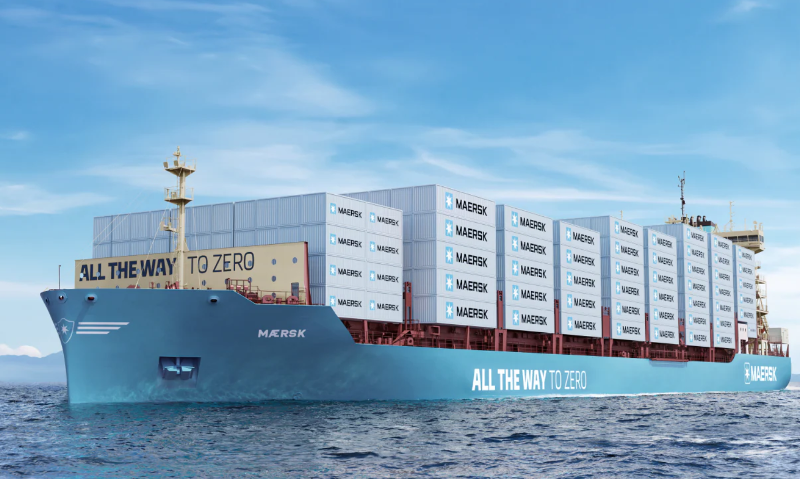
Maersk has overtaken COSCO Shipping to become the largest container operator in the fiercely competitive intra-Asia market, according to the latest fleet survey by Alphaliner.
The Danish carrier deployed more than 340,000 TEUs across international intra-Asia services in mid-August, an increase of around 34,000 TEUs year-on-year, the largest capacity addition among operators in the market.
Maersk’s expansion has been supported in part by the Gemini Cooperation’s hub-and-spoke model, which uses an extensive network of Asian shuttle services to feed its main east-west routes. The carrier deployed 108 vessels in the region, with an average capacity of 3,176 TEUs per ship, the highest among the leading intra-Asia operators.
COSCO Shipping moved into second place despite operating more than 120 vessels, as its deployed capacity remained largely unchanged from the previous year.
Alphaliner estimates that total capacity deployed on international intra-Asia services, excluding domestic trades, stood at just under 2.6 million TEUs, representing a 6.2% year-on-year increase. More than 80 carriers currently compete in the market.
Mainline operators account for approximately 63% of total deployed capacity, despite operating fewer vessels than regional specialists. Their ships average 2,699 TEUs, compared with 1,338 TEUs for regional carriers.
CMA CGM posted the second-largest capacity increase, adding around 15,000 TEUs and moving ahead of Evergreen to rank third in the market.
Among regional specialists, SITC International remains the largest, with 109 vessels and approximately 157,000 TEUs deployed. It is the only regional carrier with more than 100 ships operating in intra-Asia services, reflecting its focus on connecting smaller and niche ports rather than competing primarily through vessel size.
Meanwhile, the Drewry Intra-Asia Container Index (IACI) rose 1% last week to $1,323 per FEU. The IACI Composite Index has remained at record-high levels this month, with geopolitical tensions and typhoon-related disruptions continuing to affect supply chains and constrain available capacity.