
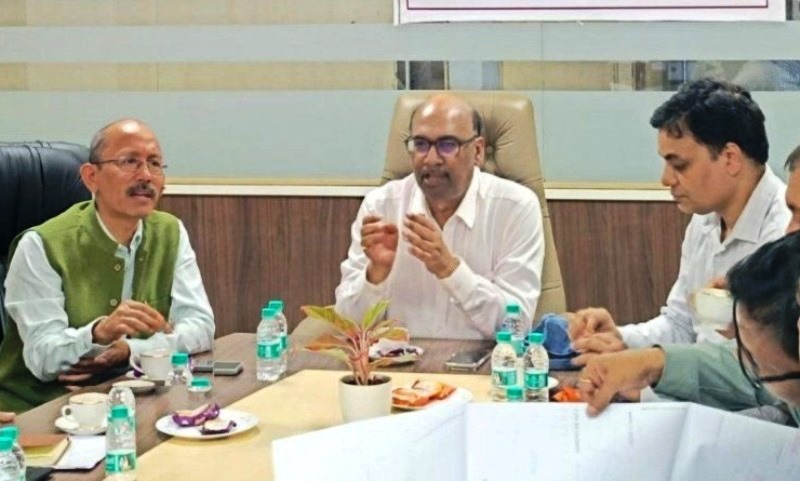
Container Corporation of India Ltd (CONCOR) Chairman and Managing Director Ajit Kumar Panda visited the Container Freight Station–Dronagiri Rail Terminal (CFS-DRT) in the Mumbai Cluster to review terminal operations and assess ongoing efforts to strengthen rail-linked logistics services.
The Dronagiri facility is an important cargo-handling node supporting EXIM and domestic containerised cargo movements in the Mumbai region. CONCOR’s Dronagiri Node, commissioned in March 2003, is spread across approximately 59 acres and has an annual handling capacity of around 200,000 TEUs.
The terminal serves a wide catchment area covering Mumbai, Pune, Aurangabad, Vapi, Gujarat and Madhya Pradesh, supporting the movement of containerised cargo across key industrial and commercial centres.
During his visit, Panda reviewed the terminal’s operational activities and interacted with the Mumbai Cluster team. Discussions and observations during the visit focused on operational efficiency, terminal management, customer-oriented services and the effective integration of rail-based freight movement with the broader logistics network.
The visit underscores CONCOR’s continued focus on strengthening its terminal infrastructure and improving the efficiency and reliability of multimodal freight transportation, particularly through greater utilisation of rail-linked container logistics.