
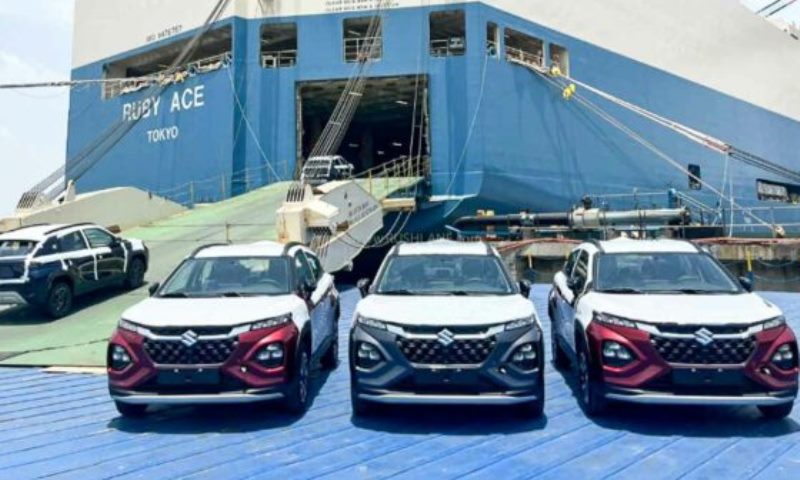
India’s largest carmaker, Maruti Suzuki India Ltd., has flagged worsening shipping disruptions in West Asia, warning that even alternative shipping routes being used to export vehicles are facing increasing challenges amid the ongoing conflict.
Despite the logistical difficulties, demand for vehicles in affected markets remains strong, prompting the company to explore alternative channels to reach customers.
Speaking at a press conference on Sunday, Rahul Bharti, Senior Executive Officer (Corporate Affairs) at Maruti Suzuki, said the situation in the Middle East had deteriorated further, with disruptions now affecting alternative routes as well.
“The Middle East situation has actually slightly worsened. We were using an alternate route, even that alternate route has a bit of a problem,” Bharti said.
He noted that the company’s strong export performance had been achieved despite the mounting challenges and expressed optimism about further growth once the conflict subsides.
Maruti Suzuki exported 49,872 vehicles in October 2026, registering a 59.3% increase compared with the corresponding month last year. The company accounts for more than half of India’s passenger vehicle exports.
Bharti said the export growth was particularly encouraging given the sharp decline in shipments to Mexico, where import duties were increased from 20% to 50%.
Maruti Suzuki exports vehicles to around 120 countries, helping diversify its exposure across international markets. The company is also expanding its presence in developed markets through electric vehicle exports, with its e-Vitara being shipped to destinations including Europe and Japan.
The ongoing West Asia conflict has disrupted key maritime trade routes, including the Strait of Hormuz, affecting shipping movements and increasing logistics costs. These developments pose challenges for several Indian automotive manufacturers, including Hyundai Motor India, Volkswagen and Nissan, as well as two-wheeler exporters such as Bajaj Auto, TVS Motor and Hero MotoCorp.
Rising logistics expenses and commodity prices have also affected profitability. Maruti Suzuki reported a 26% decline in profit to ₹2,466 crore in the September quarter, while Hyundai Motor India recorded a 24% fall to ₹1,196 crore.
Bharti cautioned that export performance would continue to vary across markets, with some destinations recording strong growth while shipments to others could decline or come to a halt.
“Exports are always a mixed bag, it is very difficult to predict. But certainly, yes, it should be positive if the conflict gets over,” he said.
The company believes that a resolution to the West Asia conflict could unlock further export growth by easing shipping constraints and restoring smoother access to key international markets.