
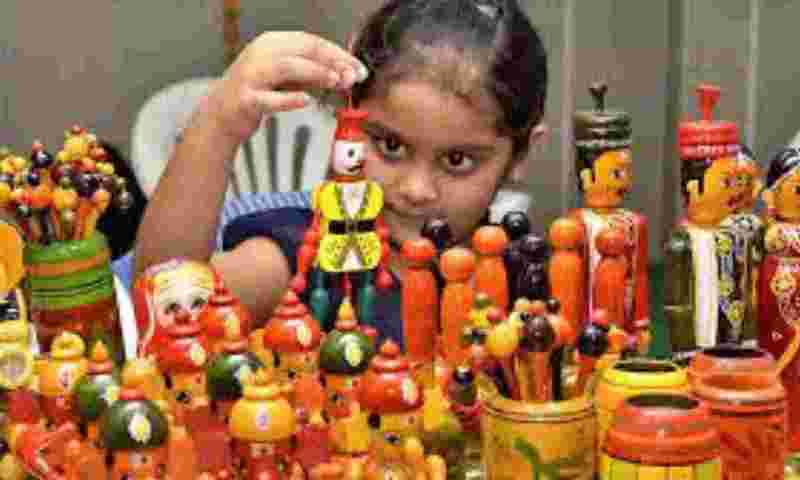
Government measures such as mandatory quality control orders and increasing customs duty have helped boost exports of toys from India, but there is a need to do much more for the sector, a top official said on Wednesday. Secretary in the Department for Promotion of Industry and Internal Trade (DPIIT) Rajesh Kumar Singh also indicated that they are diligently pursuing the proposal of extending fiscal incentives under the production-linked incentive scheme for the sector.
He said that the industry is wondering about one proposed major policy intervention and “let me assure you that we are still pursuing that”.
In the interim Budget in February, the Commerce and Industry Ministry has recommended an outlay of Rs 3,489 crore for the Production Linked Incentive (PLI) scheme for toys to boost domestic manufacturing of the sector.
As the scheme is yet to be cleared by the Union Cabinet, the interim Budget has made a token provision of Rs 1 lakh towards the scheme for 2024-25.
The scheme aims to attract investments in key sectors and cutting-edge technology; ensure efficiency, bring economies of size and scale in the manufacturing sector and make Indian companies and manufacturers globally competitive.
Singh said that the country’s toy exports have jumped to USD 325.72 million in 2022-23 from USD 96.17 million in 2014-15 as the government is providing all-around support for creating a conducive manufacturing ecosystem for the toy industry.
Imports of toys dipped by 52 per cent from USD 332.55 million in 2014-15 to USD 158.7 million in 2022-23.
“The national action plan for toys and other initiatives has had a good impact, but we need to do much more,” Singh said, adding the sector holds huge exports and job potential.
In order to make India a global hub for toy manufacturing, the government has undertaken a series of initiatives including the formulation of a comprehensive National Action Plan for Toys (NAPT) to promote the designing of toys, using toys as a learning resource, monitoring quality of toys, and promoting indigenous toy clusters.
The secretary was speaking at a toy workshop in New Delhi.
In order to enable further growth, increased market access and development of new-age marketing skills, DPIIT conducted a workshop with Flipkart and the Indian Toy Industry. Flipkart, Walmart and the Toy Association of India participated in the event.
Joint Secretary in the DPIIT Sanjiv said that the workshop was aimed at enhancing India’s position and capabilities in the global toy supply chain.
It will help the toy manufacturers understand the nuances of online selling which shall in turn help in the growth of sales and market access, Sanjiv said.
The issues figured out in the workshop included ways to increase sourcing by online platforms, onboarding of manufacturers on the Flipkart platform and upskilling.
It was also aimed at supporting online selling, scaling domestic consumption and upskilling /reskilling workforce.
Last year, Flipkart informed toy makers about their requirements and expected quality standards, as it is directly engaging with domestic toymakers for sourcing.
The online platforms provide greater access to a much wider customer base across India, expanding their market reach significantly. E-commerce eliminates the need for physical stores, reducing operational costs. It also provides valuable brand exposure to a large audience.
Additionally, e-commerce platforms offer data on consumer buying habits and preferences, allowing manufacturers to develop products that cater to market demands.
India raised import duties on toys beginning in February 2020. The basic customs duty was increased from 20 per cent to 60 per cent and then to 70 per cent in July 2021.