
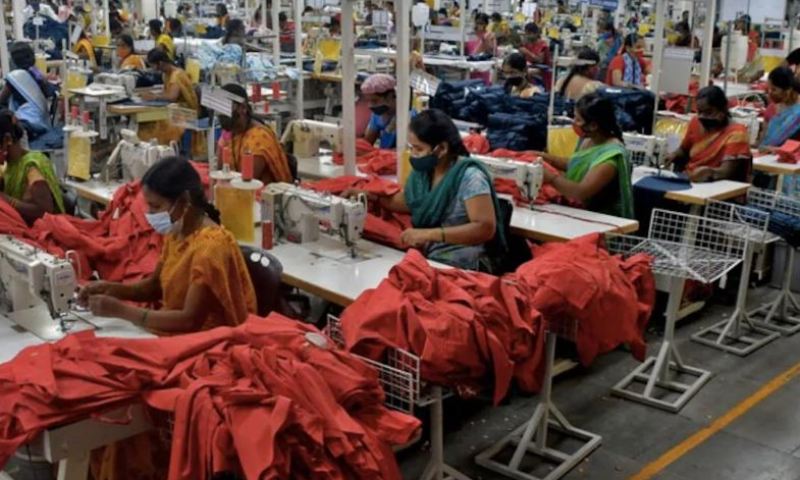
As political unrest in Bangladesh intensifies, the country’s crucial textile sector faces potential disruption, prompting international buyers to consider alternative markets, with India emerging as a likely beneficiary.
Industry experts project that India could see an additional USD 300-400 million in monthly textile orders if 10-11 per cent of Bangladesh’s export business is redirected.
K M Subramanian, President, Tiruppur Exporters’ Association, anticipates a 10 per cent increase in orders to Tiruppur, a key Indian textile hub, for the current financial year.
Bangladesh, which currently exports apparel worth USD 3.5-3.8 billion monthly, holds significant market share in the European Union, United Kingdom, and United States. In contrast, India’s monthly textile exports range from USD 1.3-1.5 billion.
Prabhu Damodaran, Secretary, Indian Texpreneurs Federation, commented on the situation : “If the current disruption persists, it will affect buyer sentiment. Buyers will likely shift some orders to India and other countries initially.”
He further added, “We have the capacity to handle an additional USD 300-400 million in orders immediately.”
The crisis comes at a critical juncture for Bangladesh, which was projected to surpass USD 50 billion in annual exports by 2024, up from approximately USD 47 billion in 2023.
Furthermore, the unrest may prompt Indian-owned manufacturing units in Bangladesh to relocate.
Trade policy analyst S Chandrasekaran estimates that around 25 per cent of textile units in Bangladesh are Indian-owned, including companies such as Shahi Exports, House of Pearl Fashions, and Gokaldas Images.
Chandrasekaran added, “The movement of consignments is stuck, and there is a breakdown in the supply chain for the upcoming Christmas season.”
He emphasised, “India has an advantage here because orders will be diverted. The sudden drop in global volumes may be compensated by a rise in Indian exports.”
As the situation unfolds, the global textile industry watches closely, with potential shifts in production and trade patterns on the horizon.