
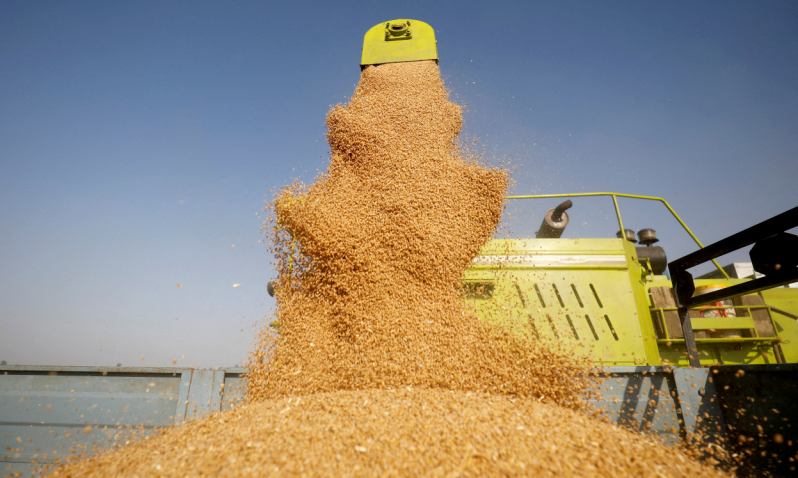
India exported wheat worth $69 million in September, nearly four times the level recorded in the previous month, following the government’s decision to lift restrictions on wheat shipments, according to Commerce Department data reported by Business Standard.
India, the world’s second-largest wheat producer, had exported wheat worth $50.8 million during April-July of FY27, despite the export restrictions. The sharp increase in September shipments was driven by stronger demand from neighbouring countries, favourable currency movements and continuing disruptions in Russian trade routes.
Bangladesh accounted for a significant share of the shipments, while the United Arab Emirates, Sri Lanka and Nepal were among the other destinations. Indian wheat was exported at an average price of around ₹2,964 per quintal during the month.
The government had prohibited wheat exports in May 2022 following a heatwave that affected domestic production and pushed prices to record levels, raising concerns over food security. The restrictions were subsequently eased through limited export permissions before being removed more broadly.
The latest export recovery has been supported by comfortable domestic stock positions. Wheat reserves in the Central Pool stood at 46.31 million tonnes as of October 1, against the prescribed buffer requirement of 20.52 million tonnes. The stocks were 126 per cent above the required level, providing the government with sufficient room to permit exports without compromising domestic food security.
However, industry representatives believe the September momentum may be difficult to sustain. Indian wheat remains relatively expensive compared with supplies from competing international markets, largely due to higher domestic prices and the minimum support price (MSP).
Indian wheat is currently priced at around ₹2,900-2,980 per quintal, while prices at Bangladesh ports are approximately ₹3,100-3,200 per quintal. The price advantage available in September, when Bangladeshi prices were higher, helped create an export opportunity.
Navneet Chitlangia, past president of the Roller Flour Millers’ Federation of India, said substantial export volumes may not materialise as international prices remain lower than domestic prices. Declining vessel freight rates, easing US-Iran tensions and a weaker dollar could further reduce the competitiveness of Indian wheat in neighbouring markets.
The MSP for wheat has increased from around ₹2,015 per quintal in 2022-23 to ₹2,610 per quintal for the 2027-28 marketing season.
Industry representatives have urged the government to maintain an open export policy for wheat and wheat products, arguing that frequent restrictions disrupt established trade relationships and undermine price discovery.
Meanwhile, the pace of rabi crop sowing has remained significantly below last year’s level. The total area under rabi crops stood at 3.75 million hectares as of October 30, down 46 per cent from 6.90 million hectares during the corresponding period last year, according to Agriculture Ministry data.
The government has set a wheat production target of 121 million tonnes for the 2026-27 crop year, following record production of 120.7 million tonnes in the previous year. Wheat is generally sown during October-November and harvested in March-April.