
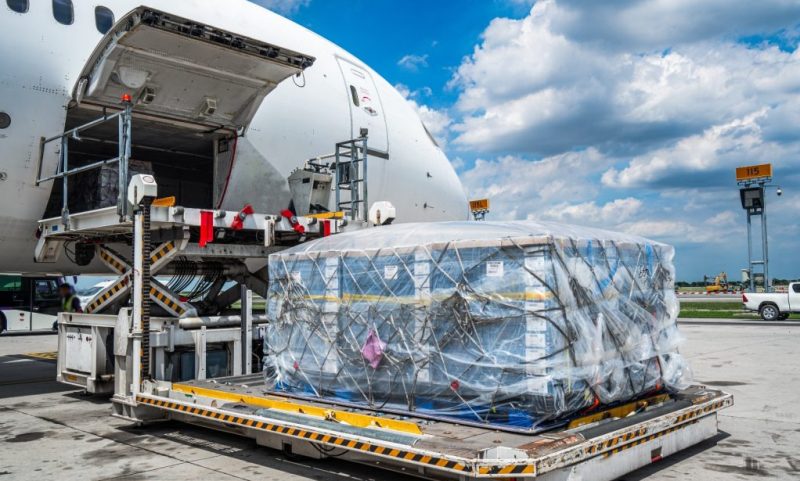
Exporters and traders in Gujarat are increasingly turning to air cargo as shipping disruptions caused by the Red Sea crisis lead to severe delays in sea freight. International air cargo volumes from Ahmedabad rose 33% between April and October 2024 compared
to the same period last year. The Sardar Vallabhbhai Patel International (SVPI) Airport’s two cargo complexes handled 31,600 metric tonnes (MT) of international cargo during this period, up from 23,600 MT last year. Export volumes saw a notable rise, increasing from 23,600 MT to 29,600 MT, underscoring a growing dependence on air freight despite higher costs. Shipping delays, which now average 35–70 days compared to the usual 20–25 days, have forced exporters to prioritise air transport to meet delivery deadlines.
Manoj Kotak, President of the Mundra Customs Brokers Association, highlighted that 25% of cargo, particularly pharmaceuticals and chemicals, has shifted to air freight. “Previously, vessels to the US, Europe, and Russia via the Red Sea took 15–20 days. Now, alternate routes have extended transit times significantly,” he noted. In October alone, SVPI Airport handled 4,800 MT of exports and 900 MT of imports, up from 4,080 MT and 905 MT, respectively, in October 2023. Gujarat, which contributes 20% of India’s exports and manages 40% of the country’s overall cargo through its ports, is witnessing a realignment in freight movement. Exporters are choosing air cargo not only for timely deliveries but also to counter vessel shortages. Current waiting times for sea shipments stretch to at least 15 days, further exacerbating delays.