
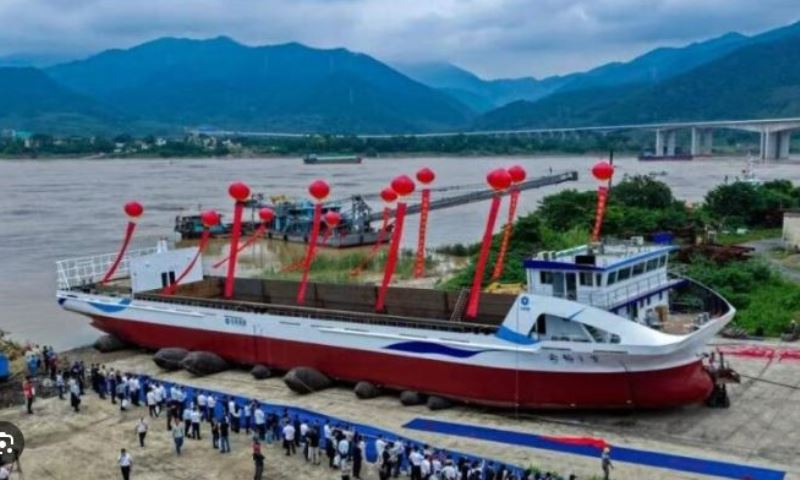
China is stepping up efforts to decarbonise its inland shipping sector, targeting the deployment of 1,000 electric-powered inland vessels and 100 methanol-fuelled ships by 2028.
The initiative forms part of the country’s broader strategy to reduce emissions from waterborne transport and promote cleaner alternatives to conventional marine fuels. Inland shipping plays a significant role in moving bulk commodities, industrial materials and containers across China’s extensive river and canal network.
China’s transport, industry and energy authorities have outlined the targets in a 2026–2030 action plan. By 2028, the country aims to double its fleet of new-energy inland vessels compared with 2025 levels and establish 3,000 kilometres of zero-carbon waterway transport corridors.
China also plans to expand supporting infrastructure, including vessel charging and battery-swapping facilities across the Yangtze River Delta and methanol bunkering services along the main Yangtze River. Demonstration routes are planned to help accelerate the adoption of alternative-fuel vessels.
The programme is part of China’s broader effort to cut emissions from inland shipping while strengthening its shipbuilding, clean-energy and maritime logistics industries. By 2030, the country aims to move towards wider commercial deployment of new-energy vessels, supported by improved technology, infrastructure and operating standards.