
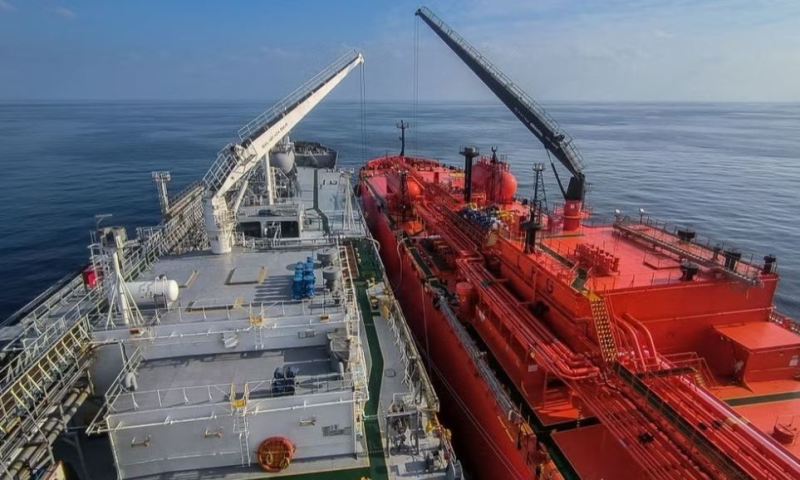
China has completed a major green methanol bunkering operation for an international ocean-going vessel, strengthening the country’s position as an emerging hub for alternative marine fuels. Chinese ports have rapidly expanded their green methanol bunkering capabilities as shipping lines increase investment in lower-carbon fuels.
Shanghai has emerged as a leading centre for green methanol bunkering. In August, Shanghai Yangshan Port supplied about 8,000 tonnes of green methanol to a CMA CGM container ship, setting a global record for the largest single green methanol bunkering operation at the time.
The country has also expanded ship-to-ship bunkering capabilities. Shandong Port Group completed a 2,500-tonne green methanol bunkering operation for two international COSCO Shipping Lines vessels at Qingdao earlier this year, marking China’s first one-to-many ship-to-ship green methanol bunkering operation.
The expansion of bunkering infrastructure is being supported by new supply chains linking green methanol production, storage, transportation and port delivery. Shanghai has developed an integrated supply network using locally produced green methanol, while regional corridors are connecting production centres with major maritime hubs.
Green methanol is gaining attention as one of the key alternative fuels for international shipping, with its potential to reduce lifecycle carbon emissions compared with conventional marine fuels. China’s growing bunkering network is expected to support the deployment of methanol-fuelled vessels and the broader decarbonisation of maritime transport.