
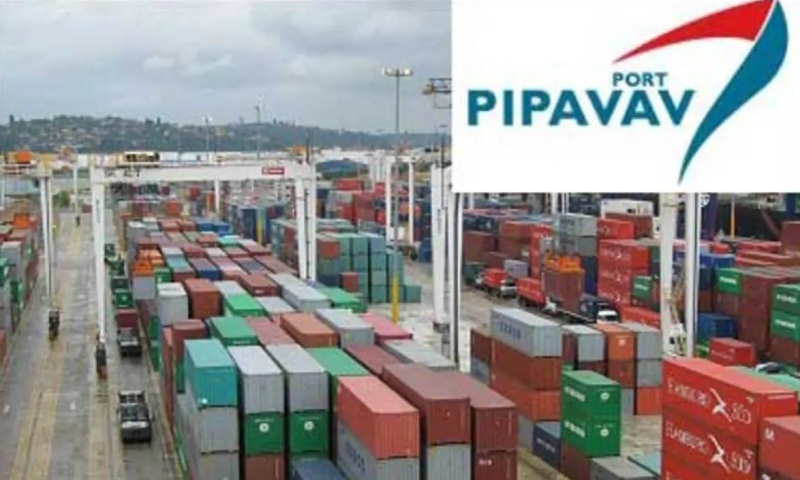
Gujarat Pipavav Port Ltd (GPPL), which operates APM Terminals Pipavav, has taken a step forward in its efforts to secure an extension of its port operating concession, following a recent comfort letter issued by the Gujarat Maritime Board (GMB). The development has prompted the company to conserve cash as it prepares for a major expansion programme involving investments of around ₹17,000 crore.
The comfort letter, however, does not constitute formal approval of the concession extension. GMB has asked GPPL to submit, within 90 days, a detailed assessment of the port’s performance during the existing concession period, along with a fresh investment and business plan for the proposed extended tenure.
GPPL is preparing the required submissions and expects to complete the process within the calendar year. The company’s immediate priority is to reach an understanding with GMB on the proposed investment and master plans before proceeding with the next steps in the concession extension process.
Speaking during a recent earnings call, Managing Director Girish Aggarwal said the board had decided to conserve cash for future growth investments in view of the comfort letter received from GMB. The company has also reduced its interim dividend to ₹3 per share, reflecting its focus on funding future expansion.
The proposed ₹17,000 crore investment programme was outlined in a non-binding memorandum of understanding signed between GPPL and GMB in October 2025. The expansion plans include increasing container, liquid and roll-on/roll-off (RoRo) cargo-handling capacities, besides developing additional storage facilities and rail siding infrastructure.
GPPL operates Pipavav port under a 30-year Build-Own-Operate-Transfer (BOOT) concession agreement signed with the Gujarat government and GMB on September 30, 1998. The existing agreement is scheduled to expire on September 29, 2028. The company had applied for an extension in 2011 and again in 2021.
While the latest development offers some clarity, the final extension and its terms remain subject to regulatory discussions and formal approval. The management has also maintained a cautious position until an extended concession agreement is officially signed.
Mundra concession extension under close watch
The developments at Pipavav are being closely monitored by other private port operators, particularly Adani Ports and Special Economic Zone (APSEZ), which operates Mundra Port.
Mundra’s existing concession agreement is due to expire on February 16, 2031. APSEZ had submitted applications seeking an extension in 2015 and 2021.
During the company’s second-quarter earnings call, APSEZ Chief Executive Officer Ashwani Gupta indicated that discussions regarding Mundra’s concession extension were progressing positively. He also acknowledged that Pipavav was ahead in the process, following the issuance of the comfort letter by GMB.
The Gujarat government has been working on a policy framework for private ports approaching the end of their concession periods and had sought the Union government’s approval for the proposed framework. However, a formal announcement is still awaited.
The outcome of the Pipavav case could therefore have wider implications for private port operators across Gujarat, as clarity on concession tenure is essential for attracting long-term infrastructure investments.
Gujarat considers longer concession periods
Gujarat introduced its BOOT framework in 1997, offering private port developers an initial concession period of 30 years. However, several coastal states have subsequently adopted longer concession structures to encourage private investment in port infrastructure.
Ports such as Gangavaram and Krishnapatnam in Andhra Pradesh have concession structures allowing potential operating periods of up to 50 years, while Vizhinjam Port in Kerala has a potential concession horizon of 60 years. Odisha has also adopted longer-duration arrangements for private port development.
Gujarat is increasingly moving in the same direction. The state’s recently announced shipbuilding policy provides for waterfront concessions of up to 50 years for new shipyards. GMB has also indicated that concession periods for six proposed greenfield ports could range between 30 and 50 years, depending on the bidding process.
For GPPL, securing greater clarity on its concession extension will be critical to moving forward with its proposed ₹17,000 crore investment programme. The decision could also establish an important precedent for Mundra and other private port operators seeking longer operating horizons to support their future infrastructure development plans.