
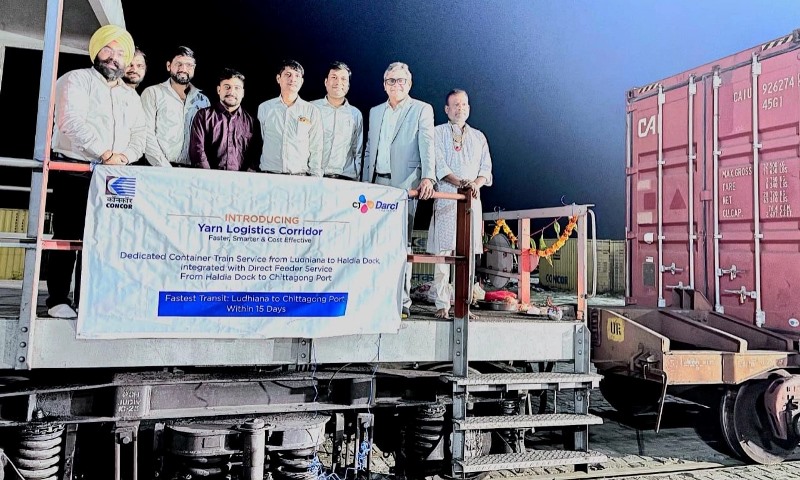
CJ Darcl Logistics Ltd. has launched a dedicated container train service connecting Ludhiana in Punjab with Haldia in West Bengal, further enhancing multimodal connectivity for exporters in North India.
The inaugural container train departed from ICD Ghungrana on February 28, 2026, and is scheduled to arrive at Haldia Dock Complex in early March. The new rail link is designed to provide seamless integration with the company’s feeder service operating from Haldia Port to Chittagong Port.
With this integration, CJ Darcl now offers a comprehensive Ludhiana-to-Chittagong logistics solution, targeting a total transit time of within 15 days. The service is expected to significantly reduce transit time for yarn shipments from the Punjab textile cluster to Bangladesh, a key sourcing and manufacturing hub.
Industry stakeholders believe the dedicated rail-sea corridor will provide exporters with improved reliability, cost efficiency, and better supply chain predictability. The company stated that the service is being offered at competitive pricing, aimed at boosting trade volumes between North India and Bangladesh.
The launch comes at a time when rail-led logistics solutions are gaining momentum in India, driven by the need for faster, scalable, and sustainable cargo movement across key industrial corridors.