
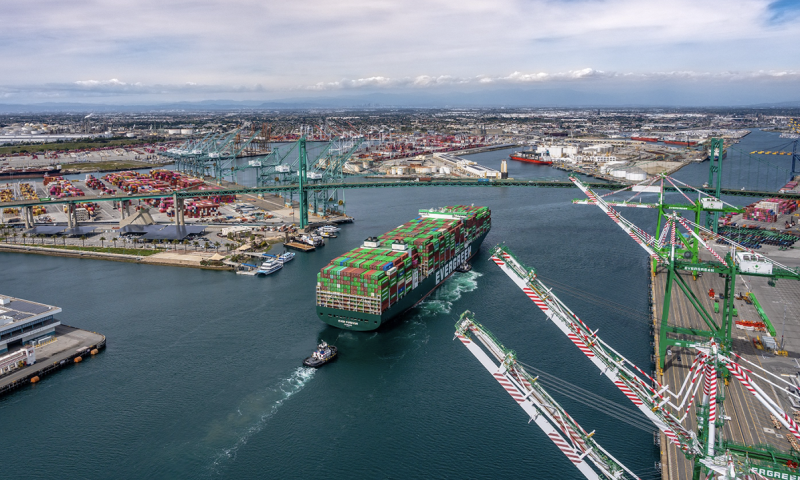
The U.S. Coast Guard has issued a safety alert after several containers unexpectedly fell from cargo vessels at the Ports of Los Angeles and Port of Long Beach, highlighting gaps in cargo handling procedures during ship-to-shore operations.
According to the alert, incidents that occurred in September and October 2025 involved multiple containers collapsing or going overboard while ships were berthed and being worked on by terminal equipment. In one notable case, fallen containers struck an emissions control barge moored alongside a vessel, resulting in damage and minor injury to a crew member.
The USCG said preliminary review showed a lack of focused planning and clear communication protocols for cargo operations when vessels are alongside docks, prompting the advisory urging carriers and terminal operators to adopt stronger safety practices.
These port incidents, including large container losses at the Long Beach facility in September 2025 that disrupted operations and required safety zones to be established, have raised concerns over operational risk in America’s busiest maritime gateways.
The Coast Guard’s safety alert aims to improve coordination between ship crews, terminal staff and regulators to prevent similar accidents and protect personnel, equipment and adjacent infrastructure during ongoing cargo movement and stacking procedures.