
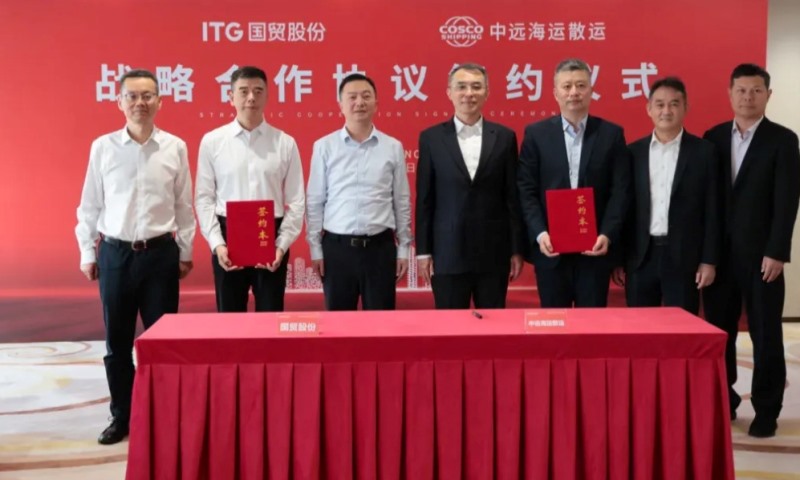
COSCO SHIPPING Bulk and Xiamen ITG have signed a strategic agreement to jointly operate an export breakbulk liner service, with Lianyungang designated as the base port.
The partnership aims to integrate COSCO SHIPPING Bulk’s fleet and shipping capabilities with Xiamen ITG’s industrial cargo base, trading channels, overseas warehouses and end-to-end logistics network.
COSCO SHIPPING Bulk has been expanding its multipurpose shipping portfolio, including 80,000-dwt multipurpose grain carriers, the North Africa container service operated by Guo Yun Hai, direct China–West Africa breakbulk sailings and participation in the multipurpose terminal project at Tarragona.
Xiamen ITG, which works with more than 90,000 companies across 170 countries and regions, operates 113 overseas warehouses and handles over 34 million tonnes of seaborne cargo annually. Its cargo aggregation capabilities could provide a steady commercial base for COSCO SHIPPING Bulk’s multipurpose fleet and support the development of a regular liner service.
Details including the service’s destinations, launch date, sailing frequency, vessel deployment and minimum cargo commitments have not yet been disclosed.
The partnership represents a shift from simply providing vessel capacity towards organising and managing cargo flows, with the success of the new service likely to depend on schedule reliability, vessel utilisation, return-cargo availability and the ability to provide integrated door-to-door logistics solutions.