
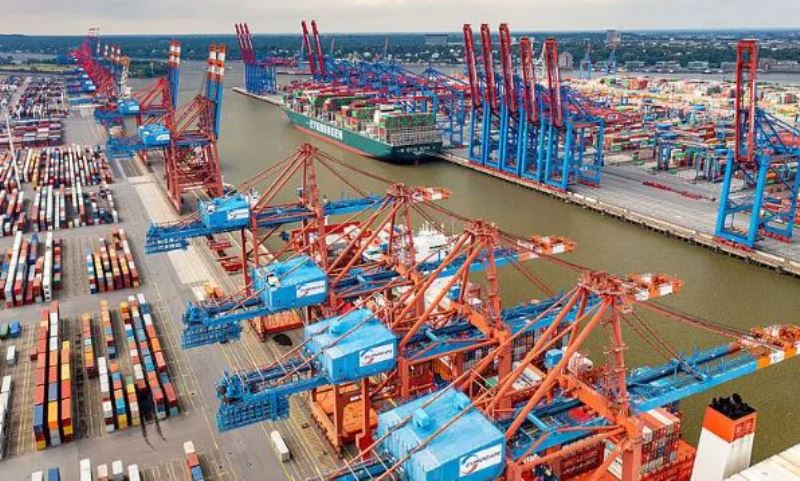
German port operators are launching a phased digital release system for container imports.
From 1 October, the digital release procedure for container imports—Secure Release Order (SRO)—will go live on the German Ports IT platform, operated by DAKOSY AG and dbh Logistics IT AG.
The rollout will occur in three stages to ensure a secure transition for all stakeholders, beginning with carriers releasing containers without PINs at the ports of Hamburg, Bremerhaven, and Wilhelmshaven.
Marco Molitor, CEO of dbh Logistics IT AG, said: “The launch of the Secure Release Order marks a major step forward in the digital handling of import processes at German ports. To ensure that all parties are able to fully prepare, we have specifically opted for a phased rollout.”
DAKOSY CEO, Ulrich Wrage, added: “German seaports are part of the critical infrastructure, which is why the focus is on a particularly secure and reliable approach.”
Stage two, running through 2 November, will onboard freight forwarders, importers and carriers to the platform.
From 3 November, stage three will make SRO implementation mandatory for all importers, starting with one terminal in Hamburg and one in either Bremerhaven or Wilhelmshaven.
In August, the Port of Hamburg announced that the Waltershofer Hafen had been approved for the bunkering of methanol and liquefied natural gas (LNG) using the ship-to-ship method.