
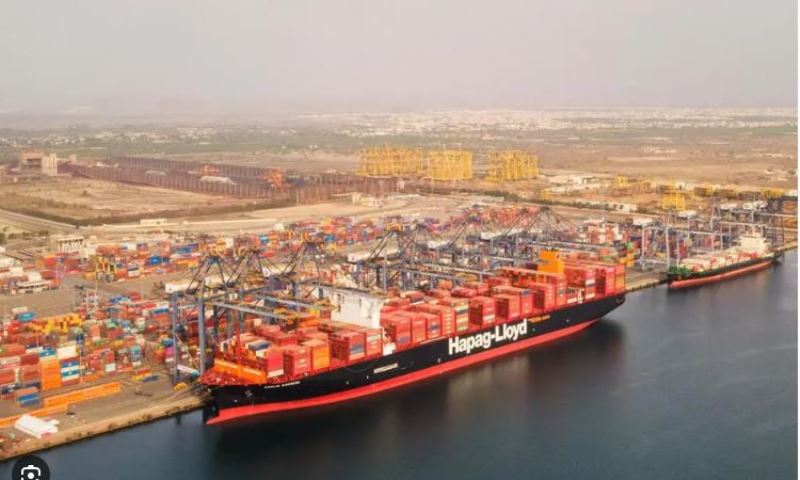
Hapag-Lloyd has announced a new Peak Season Surcharge (PSS) for shipments destined for Conakry, Guinea, and Freetown, Sierra Leone, as the carrier responds to rising seasonal demand and evolving market conditions across West African trade routes.
The surcharge is intended to help manage increased operational costs and maintain service reliability during periods of heightened cargo volumes. Peak Season Surcharges are commonly introduced by shipping lines to address fluctuations in demand, equipment availability, port congestion, and network capacity.
The revised pricing will apply to applicable cargo moving to the two West African ports, affecting exporters, importers, and freight forwarders serving the region. Shippers are advised to review the updated surcharge structure and factor the additional costs into their logistics planning and contract negotiations.
Despite the adjustment, Hapag-Lloyd continues to focus on providing reliable container shipping services across its global network, with West Africa remaining an important market for commodities, consumer goods, industrial equipment, and project cargo. The carrier is also working to optimise vessel utilisation and equipment positioning to support efficient cargo movement.
For businesses trading with Guinea and Sierra Leone, the new PSS highlights the importance of proactive supply chain planning, particularly during peak shipping periods when freight demand and operational pressures tend to increase. Logistics providers may also seek alternative routing or booking strategies to minimise the impact of higher transportation costs.
The introduction of the surcharge reflects broader trends in the container shipping industry, where carriers continue to adjust pricing mechanisms in response to changing market dynamics. As global trade patterns evolve, flexible pricing strategies remain an important tool for balancing network efficiency, service quality, and operational sustainability.