
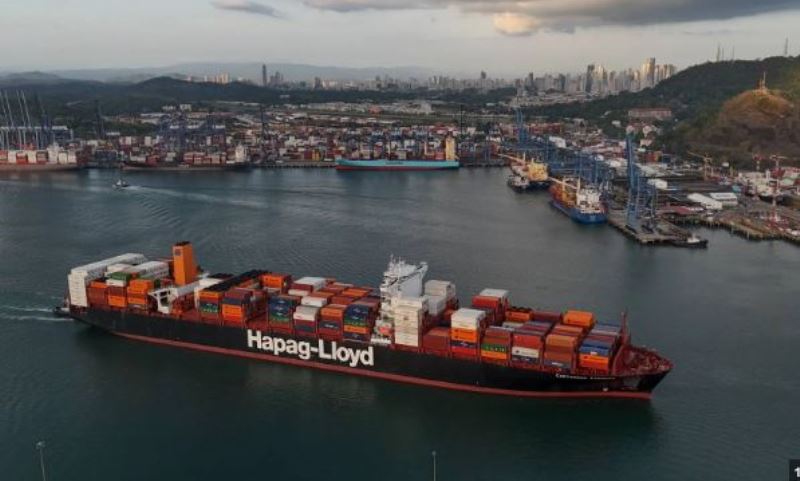
Hapag-Lloyd is introducing a new €50 congestion surcharge for inland shipments to and from several Central European countries routed through the ports of Antwerp, Belgium, or Rotterdam, Netherlands. The carrier said the measure is being introduced because low water levels on the Rhine are reducing barge capacity and increasing demand for alternative inland transport.
The Congestion Surcharge, applied under the Pre-Carriage Surcharge (PCS) or On-Carriage Surcharge (OCS) codes, will cover all inland transport modes, including truck, rail and barge movements.
Surcharge levels
For Belgium, the Netherlands and Luxembourg, Hapag-Lloyd will charge €50 per container.
For shipments involving Germany, France, Austria, the Czech Republic, Slovakia, Hungary and Switzerland, the charge will be €50 per TEU.
The surcharge applies to inland shipments to or from locations in these countries when the cargo is routed through Antwerp or Rotterdam.
Effective dates
For non-FMC cargo, the new surcharge will take effect from 1 September 2026.
For FMC-relevant shipments, the surcharge will become effective from 20 September 2026.
Hapag-Lloyd said the current disruption is being driven by low water levels on the Rhine, which have reduced available barge capacity. This has increased pressure on truck and rail networks as shippers seek alternative inland transportation options, resulting in tighter overall capacity.
The new fee adds to the inland cost pressures already facing shippers across the region, where carriers have been adjusting fuel and other operational surcharges in response to changing transportation conditions. Hapag-Lloyd’s existing Central European inland tariff information also reflects additional fuel and congestion-related charges on certain routes.