
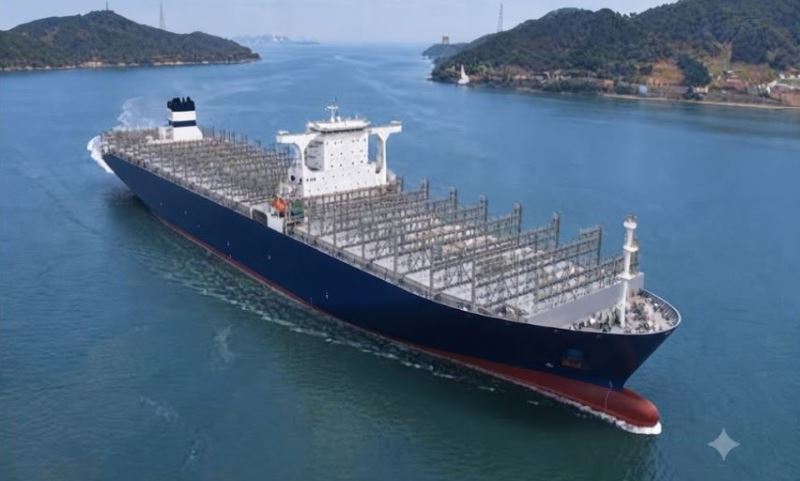
HD Hyundai has delivered what it describes as the world’s first lashing-free container ship, marking a development in container vessel design aimed at improving cargo-handling efficiency and reducing manual operations.
The vessel uses an automated system that eliminates the need for conventional lashing and unlashing of containers. Traditional container ships require workers to secure containers with twist locks and lashing equipment, particularly on deck, to ensure cargo remains stable during voyages.
By removing the need for manual lashing, the new design is expected to improve safety for dockworkers while reducing the time required for container handling during port calls. It could also contribute to more efficient vessel turnaround operations.
The technology is part of a broader move toward automation and digitalisation in the container shipping industry. Shipping lines and shipbuilders are increasingly looking at automated cargo-handling systems to improve productivity, reduce operational risks and address labour-intensive processes.
The vessel’s design could also provide greater flexibility in container operations, although its commercial benefits will depend on how the technology performs under different operating conditions and across ports.
HD Hyundai’s delivery highlights the growing focus on automation in shipbuilding as the industry seeks to improve safety and efficiency while handling increasingly large container volumes.
If adopted more widely, lashing-free technology could influence future container vessel designs and reduce the amount of manual work required during loading and unloading operations.