
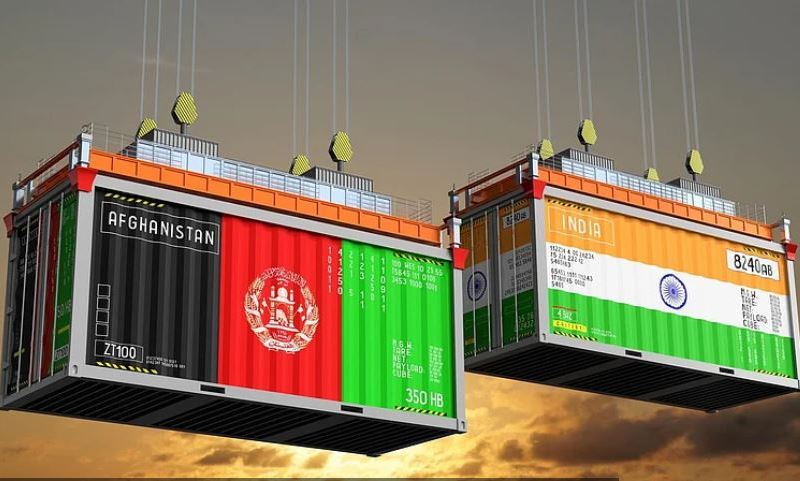
India has emerged as Afghanistan’s largest export destination, overtaking Pakistan in a significant shift in regional trade dynamics. The development underscores the strengthening commercial ties between the two countries and highlights India’s growing importance as a market for Afghan products.
Recent trade data indicate that exports from Afghanistan to India have increased steadily, driven by strong demand for agricultural and horticultural products such as dry fruits, fresh fruits, saffron, medicinal herbs and other high-value commodities. The growth has enabled India to surpass Pakistan, which has traditionally been Afghanistan’s principal export market.
Industry observers attribute the change to a combination of factors, including improved trade facilitation measures, diversification of export destinations by Afghan businesses and recurring logistical and border-related challenges affecting trade through Pakistan. Afghan exporters have increasingly sought alternative markets to reduce dependence on a single trade corridor and expand access to larger consumer bases.
India has supported trade with Afghanistan through various connectivity initiatives and trade mechanisms that facilitate the movement of goods. The two countries have maintained commercial engagement despite regional geopolitical complexities, helping Afghan producers reach one of the world’s fastest-growing consumer markets.
The shift is expected to provide new opportunities for Afghan exporters, particularly in the agriculture sector, which remains a key contributor to the country’s economy. Access to the Indian market offers the potential for higher export earnings and greater product diversification, while also encouraging investment in value-added processing and quality improvements.
For India, stronger trade ties with Afghanistan align with broader efforts to deepen economic engagement in the region and secure reliable sources of specialty agricultural products. The expanding trade relationship could also create opportunities for greater cooperation in logistics, infrastructure and capacity-building initiatives.
Trade experts believe the milestone reflects evolving regional trade patterns and the increasing integration of South Asian markets. As commercial relations continue to strengthen, both countries are expected to explore additional avenues for expanding bilateral trade and enhancing economic cooperation in the years ahead.