
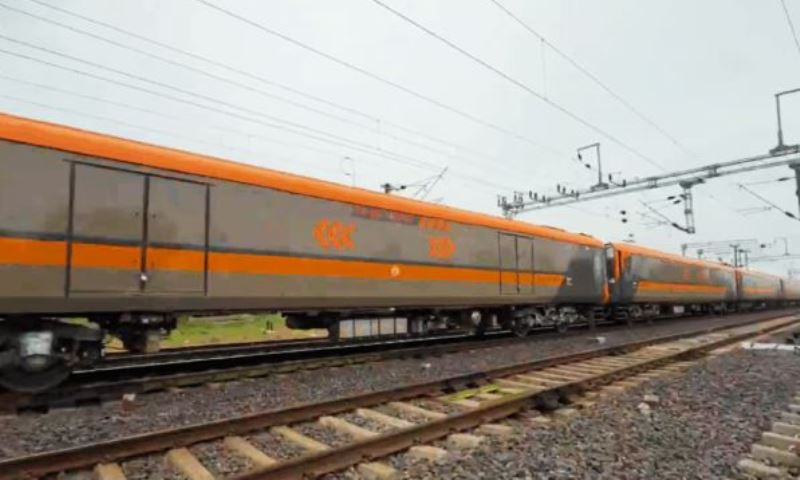
India has successfully conducted trials of its first Vande Bharat freight train, reaching speeds of 145 kmph, marking a major milestone in the modernization of the country’s rail freight network. The high-speed cargo train is expected to significantly improve the movement of time-sensitive goods, particularly for the fast-growing e-commerce, express logistics, and parcel delivery sectors.
Designed on the Vande Bharat platform, the freight train aims to provide faster, more reliable, and energy-efficient transportation compared with conventional freight services. The successful high-speed trial demonstrated the train’s operational capabilities and highlighted its potential to reduce transit times on key logistics corridors.
The service is expected to cater to a wide range of cargo, including e-commerce parcels, consumer goods, electronics, pharmaceuticals, perishable products, and other high-value shipments requiring rapid delivery. By integrating with India’s expanding multimodal logistics infrastructure, the train could help streamline supply chains and improve last-mile delivery efficiency.
The introduction of the Vande Bharat freight train aligns with the government’s efforts to modernize railway infrastructure, increase the share of freight transported by rail, and reduce logistics costs. Faster cargo movement is expected to enhance supply chain resilience, support domestic manufacturing, and strengthen India’s position as a competitive logistics hub while promoting a shift toward more sustainable transportation.