
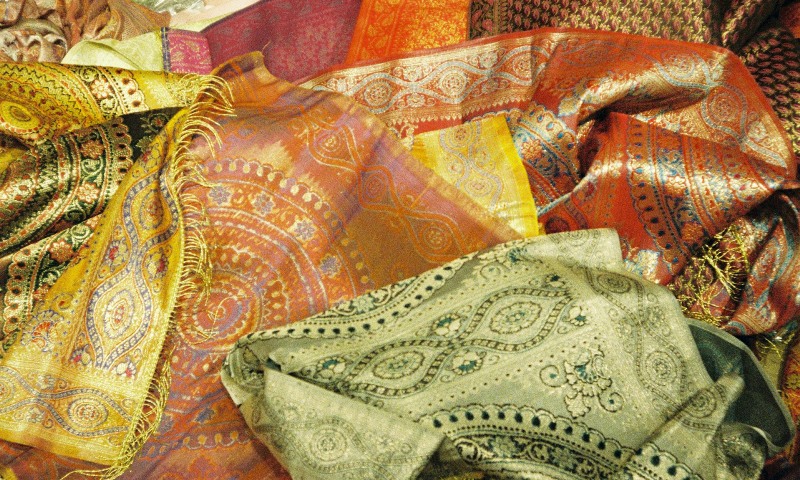
India as the world’s second-largest producer of silk, is witnessing an upsurge in its silk exports. With a rise of nearly one-fifth recorded during the April-January period of the financial year 2023-24, this surge is attributed to increasing demand for silk products including fabrics, made-ups, and ready-made garments.
Sericulture Industry: A Vital Economic Contributor
The sericulture industry in India stands as a cornerstone of its economy, employing approximately 9.76 million individuals across rural and semi-urban regions. Recognized as one of the largest foreign exchange earners for the country, this sector spans across over 52,300 villages. India produces four major types of natural silks – Mulberry, Eri, Tasar, and Muga, which serve as the foundation of silk-based products including garments, fabrics, yarns, carpets, and more.
Export Dynamics: A Comprehensive Overview
With a global demand extending to over 30 countries, key importers encompass nations like the USA, UAE, China, UK, Australia, Germany, and France, among others. The provisional official data reveals a notable surge in exports, with the value of silk goods reaching over Rs 1530 crore during the April-January period of 2023-24, compared to approximately Rs 1270 crore in the corresponding period of the previous year.
Sectoral Breakdown: Trends and Insights
Noteworthy trends emerge within specific segments of India’s silk exports. As per the media reports, the export of silk ready-made garments soared by 16.27 percent, amounting to approximately Rs 648 crore, while shipments of fabrics and made-ups witnessed a nine percent increase, reaching about Rs 490 crore. Moreover, the demand for silk wastes experienced a substantial surge of 85 percent. However, the sector witnessed a mixed performance, with a major growth in raw silk exports to the tune of Rs 8.35 crore, juxtaposed with a decline in silk yarn exports by approximately 11 percent.
Import Dynamics: A Shift in Trends
Simultaneously, India’s import landscape reflects a significant shift, particularly in raw silk. Imports during the April-January period of the financial year 2023-24 witnessed a reduction by about a third, amounting to 2,348 tonnes as compared to 3,474 tonnes in the same period of the previous year. Furthermore, the value of raw silk imported into the country saw a substantial decline of 30 percent.