
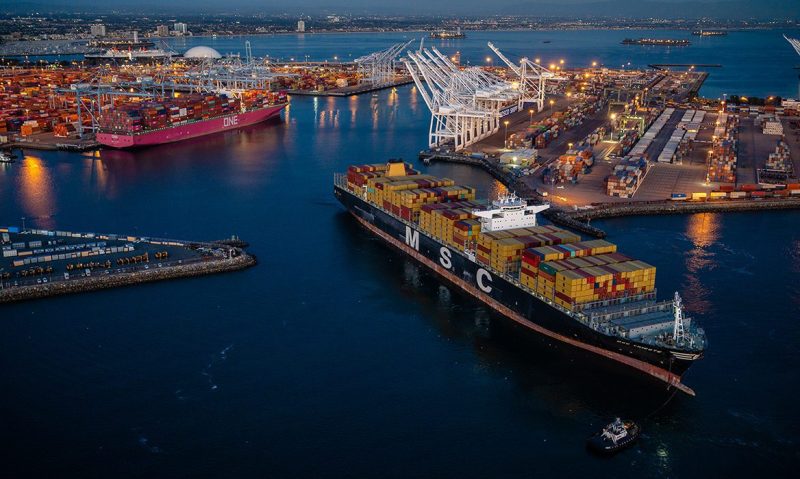
The Port of Los Angeles recorded its busiest three-month summer period on record, handling more than 2.9 million TEUs across June, July and August 2026 as strong consumer demand and early holiday shipments boosted cargo volumes.
The port processed 955,907 TEUs in August, 6% above its five-year average for the month and broadly in line with August last year. The result followed a record 1.003 million TEUs in June and 960,464 TEUs in July.
Port officials attributed the strong summer performance to resilient consumer demand, early movement of holiday merchandise and a broad mix of cargo. Retailers have been bringing forward shipments to manage tariff uncertainty and higher logistics costs.
The record summer comes despite continued uncertainty across global trade routes. Changes in trade policy, higher fuel costs and geopolitical disruptions have encouraged importers to move cargo earlier, helping sustain volumes at the US West Coast gateway.
The Port of Los Angeles said the strong momentum is continuing into September, with the gateway positioned to handle further changes in global trade patterns.
The latest figures reinforce Los Angeles’ position as the leading US container gateway and highlight the continued strength of transpacific import flows heading into the final months of 2026.