
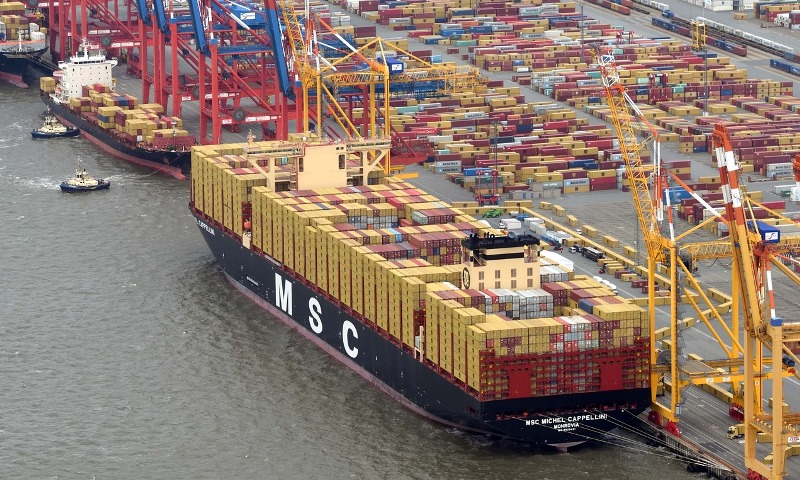
MSC Mediterranean Shipping Company has become the first container carrier in history to surpass the 20% global market share threshold, further cementing its position as the world’s largest liner operator. The milestone underscores MSC’s rapid fleet expansion strategy and growing influence in the global container shipping industry.
According to industry fleet data, MSC now controls more than one-fifth of the world’s deployed container shipping capacity, a landmark achievement in a highly competitive sector traditionally dominated by several major carriers. The company’s market share growth has been driven by an aggressive vessel acquisition programme, substantial newbuilding orders and the continued expansion of its independently operated service network.
MSC has significantly increased its fleet size over recent years through a combination of second-hand vessel purchases and orders for large, fuel-efficient containerships. The strategy has enabled the carrier to steadily widen the capacity gap with its closest competitors while strengthening its presence across major east-west and north-south trade lanes.
The achievement comes amid a period of transformation in the liner shipping sector, marked by shifting alliance structures, evolving trade patterns and growing investment in fleet modernization. MSC’s decision to operate many services independently following changes in alliance arrangements has further expanded its operational footprint and market reach.
Industry analysts note that controlling more than 20% of global container shipping capacity provides MSC with significant economies of scale, enhanced network flexibility and a stronger ability to respond to fluctuations in demand. The carrier’s extensive fleet also positions it to capitalize on emerging trade opportunities and evolving supply chain requirements.
The company continues to invest heavily in next-generation vessels and sustainability initiatives, including ships capable of operating on alternative fuels, as the maritime sector moves toward stricter environmental regulations and decarbonization targets.
MSC’s record-breaking market share highlights the growing concentration of capacity among leading container carriers and reflects the company’s long-term commitment to fleet growth and service expansion. As global trade volumes recover and shipping networks evolve, MSC is expected to maintain a central role in shaping the future direction of the container shipping industry.