
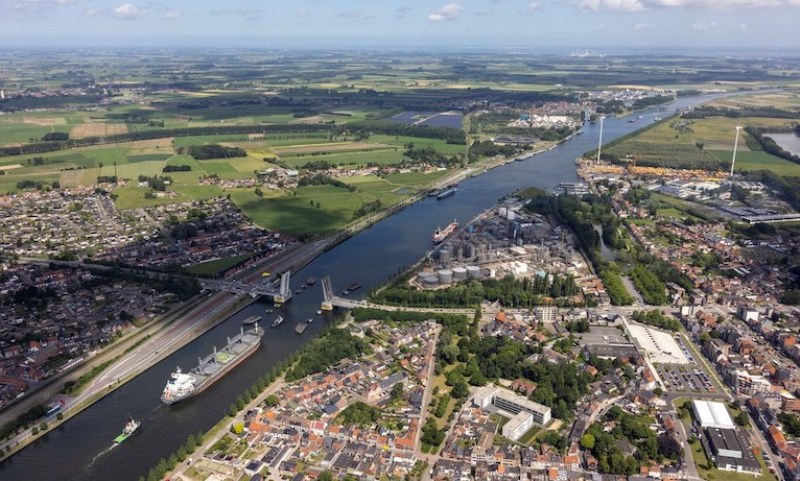
North Sea Port is facing continued navigation restrictions as drought and low water levels put pressure on the Ghent–Terneuzen Canal, affecting vessel accessibility and logistics reliability at the port complex.
As of August 21, vessels using the canal are subject to a maximum draft of 12.25 metres, limiting the amount of cargo that deeper-draft ships can carry. North Sea Port said nautical accessibility is expected to remain restricted for the time being.
The water level near Sas van Gent has fallen, although North Sea Port said it appeared to be stabilising. At the same time, salinity has risen sharply to around 9,900 mg/l, compared with a target level of 3,000 mg/l.
To conserve water and control canal levels, restrictions have also been introduced at the sea locks in Terneuzen. The West Lock remains closed until further notice, while the New Lock and East Lock face temporary closure periods around low tide.
The drought is reducing freshwater inflows from the Leie and Scheldt rivers, making it more difficult to maintain the canal’s required water level. Lower freshwater availability also increases the impact of saltwater entering the canal through the sea locks.
The situation has prompted authorities to take additional measures. Rijkswaterstaat has installed pumps at the West Lock that can be used to pump water from the Western Scheldt into the canal if necessary to maintain critical water levels and protect the canal banks.
North Sea Port is working with authorities and government officials to increase the number of lock operations where possible and reduce draft restrictions. However, the port warned that shipping access is likely to remain constrained in the near term.
The restrictions could have a direct impact on shipping schedules, vessel loading and cargo volumes, particularly for larger vessels operating through the canal. Ships unable to meet the draft limit may need to reduce cargo loads, adjust schedules or make alternative logistical arrangements.
For shippers and logistics operators, the situation creates additional uncertainty in planning cargo movements through the ports of Ghent and Terneuzen. North Sea Port has advised customers to factor the draft restrictions into logistics planning and maintain flexibility in their supply-chain arrangements.
The latest developments highlight the growing operational impact of drought on European inland and maritime waterways. Beyond shipping restrictions, prolonged low water levels are also affecting industrial water availability and increasing concerns over salinisation along the canal.
North Sea Port is continuing to monitor water levels and salinity while coordinating with the relevant Dutch and Flemish authorities. The port’s priority is to maintain accessibility while managing the limited water resources available during the ongoing dry period.