
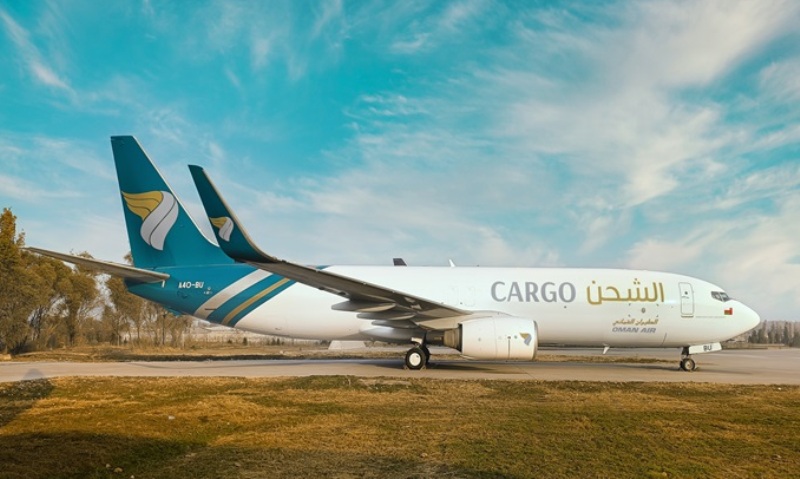
Oman Air Cargo, the freight arm of Oman’s national airline, announced plans to expand its cargo network capacity to India and Europe in the coming days amid ongoing disruptions in Middle East airspace.
The carrier said it will add extra belly hold capacity — space for freight on passenger aircraft — to its network through additional flights between Oman, the United Kingdom, Europe, India, and other parts of Asia. This decision comes as operations on some Gulf routes have been suspended due to regional airspace closures linked to increased geopolitical tensions.
Flights serving destinations such as Bahrain, Jordan, Kuwait, Qatar, and Dubai are currently on hold, forcing Oman Air Cargo to adapt its network while working to reschedule affected shipments once clearer airspace access is secured. The company noted potential delays on other routes due to longer alternate flight paths.
In its statement, Oman Air Cargo also said it was in close contact with customers to confirm cargo status and provide updates, emphasising employee safety and collaboration with airport authorities and partners.
The expansion aims to support shippers facing capacity reductions across key global corridors, where airspace restrictions have led to rerouted flights and longer transit times. Analysts say such moves help carriers maintain service continuity during volatile periods for global logistics.