
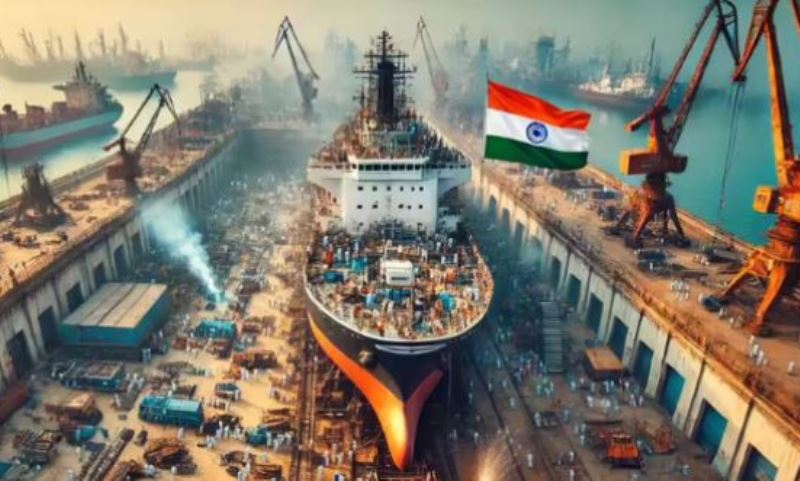
The Tamil Nadu government on Wednesday unveiled its Shipbuilding Policy 2026, a comprehensive plan designed to lure major shipbuilding players and encourage large-vessel projects — including Very Large Crude Carriers (VLCCs) and other ocean-going megaships — to invest in the state’s growing maritime sector.
Chief Minister M.K. Stalin formally released the policy, highlighting Tamil Nadu’s ambitions to develop world-class shipbuilding clusters and establish the state as a key hub in the global blue economy. The initiative builds on the region’s natural advantages — including a 1,076-kilometre coastline and deep-water access capable of handling vessels above 200,000 deadweight tons — positioning the state to compete internationally in both commercial and specialized maritime construction.
Structured Incentives to Attract Global Investment
The policy introduces a range of structured incentives aimed at attracting global shipyards and marine manufacturers: equity participation by the state, an asset leasing model of up to ₹6,000 crore, capital subsidies, and production-linked incentives for qualifying projects. Businesses that commit at least ₹1,000 crore and create a minimum of 1,000 jobs stand to benefit from these measures, officials said.
Under the equity route, Tamil Nadu may take up to a 49 % stake in proposed shipbuilding facilities, while the leasing model is designed to ease upfront capital requirements for investors. The production-linked incentives are expected to support long-term competitiveness for megaship construction.
Green and Skilled Growth Emphasis
Sustainability and green technology are core pillars of the policy. It offers incentives for zero-emission vessels and promotes green ship recycling with capital subsidies for facilities that meet international environmental certifications. The plan also includes partnerships with institutions like the Indian Maritime University and the newly proposed Shipbuilding Skill Council to ensure a workforce trained in advanced maritime technologies.
Strategic Economic Impacts
Industry analysts see the Shipbuilding Policy 2026 as a strategic move to diversify Tamil Nadu’s industrial base and significantly boost foreign direct investment into the maritime subsector. In addition to commercial shipbuilding, the plan is expected to spawn growth in related areas such as marine engineering, ship repair, and offshore platform fabrication — potentially creating thousands of jobs and strengthening India’s position in a global market where it currently has a small share.