
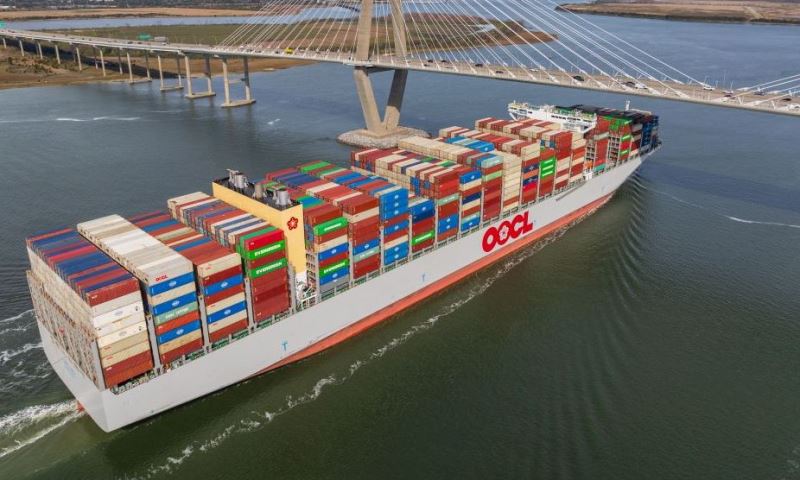
Orient Overseas Container Line (OOCL) has begun rerouting select vessels and adjusting sailing schedules as security risks escalate across key Gulf trade lanes, industry sources said.
The move comes amid heightened tensions affecting maritime corridors linked to the Strait of Hormuz and adjoining waters, which serve as critical arteries for global energy and container traffic. Shipping companies have been reassessing voyage plans in response to increased war risk advisories and rising insurance premiums.
OOCL is understood to be diverting ships to alternative routes where feasible and implementing additional onboard security protocols. The company has also informed customers of potential delays and revised transit times for certain services connecting Asia with the Middle East and Europe.
Industry analysts noted that rerouting decisions can significantly impact voyage duration and fuel consumption, potentially leading to higher freight costs. However, carriers are prioritising crew safety and asset protection amid the uncertain operating environment.
Freight forwarders said capacity adjustments across multiple shipping lines could tighten space availability in the short term, particularly for cargo bound for Gulf ports.
As geopolitical tensions continue to evolve, shipping companies are expected to maintain flexible network planning to mitigate risks while ensuring continuity of global trade flows.