
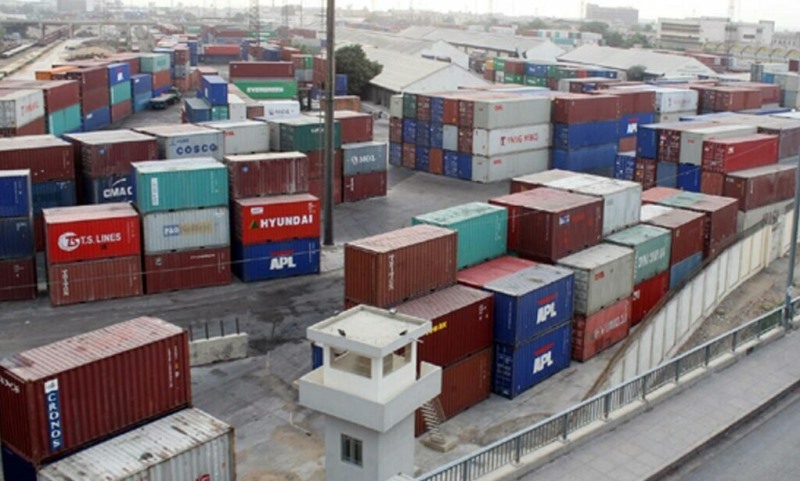
Pakistan has temporarily suspended commercial trade at the Gabd-Rimdan and Taftan border crossings with Iran over security, smuggling and administrative concerns, leaving hundreds of freight vehicles carrying essential commodities stranded and raising concerns over liquefied petroleum gas (LPG) supplies and prices.
Shahid Rind, adviser to the Balochistan chief minister on media affairs, said the closures were ordered through a notification issued by Pakistan’s Ministry of Commerce on Friday. He said the measure was intended to improve security and administrative coordination on both sides of the border.
Pakistan and Iran have offered differing explanations for the suspension. While Pakistani authorities cited security and smuggling concerns, Iranian Foreign Ministry spokesperson Esmail Baghaei attributed the disruption to technical issues. Both sides are holding consultations to resolve the problems and restore normal operations.
The Quetta Chamber of Commerce and Industry said commercial activities had been suspended across all border crossings between the two countries and advised businesses to halt fresh import and export orders until further notice.
Hundreds of trucks carrying LPG, rice, fresh fruit and other essential commodities have reportedly been stranded on both sides of the border. However, passenger traffic through the Rimdan-Gabd crossing remains operational despite the suspension of commercial movement, according to Iran’s WANA news agency.
The disruption has raised concerns over Pakistan’s energy supplies, particularly LPG imports. According to Dawn, more than 4,000 tonnes of LPG are imported daily through the Gabd-Rimdan route. The suspension could further constrain domestic availability and push up open-market prices, especially as the Taftan crossing has already experienced disruptions amid unrest in Balochistan.
The 909-kilometre Pakistan-Iran border between Balochistan and Iran’s Sistan and Baluchestan province has four official crossings: Taftan-Mirjaveh, Gabd-Rimdan, Mand and Chadgi. The temporary closure of two key trade routes has disrupted cross-border cargo movement, with businesses awaiting a resolution to the ongoing security and administrative issues.