
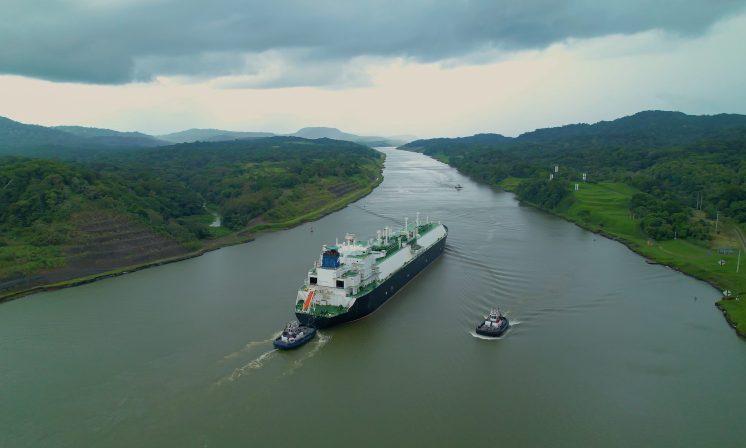
While the Red Sea has roared back to the front pages of the shipping press this week, and the Black Sea remains blighted by war, one other chokepoint that has caused supply chain chaos in recent years has reported that it is operating at full capacity.
The Panama Canal, which suffered severe drought for around 15 months through 2023 and 2024 thanks to the El Niño weather phenomenon, has managed to operate at 50ft (15.24 m) draft throughout this year’s dry season, and will continue to have a relatively wet winter , or rainy season for the remainder of the year in preparation of the next dry season in early 2026, according to the waterway’s administrator, Dr Ricaurte Vásquez Morales.
“Liquified petroleum gas and container transits have increased, and dry bulk has recovered from last year,” Vasquez said in a markets update this week.“
Canal authorities are pressing ahead with a huge $1.6bn reservoir expansion, something that, when complete, will allow for 15 extra transits a day.
Between June 2023 and September 2024, transits through the Panama Canal were restricted due to low water levels in the Gatun Lake, forcing a raft of the global merchant fleet to change routings. There were restrictions on both the total number of transits and ship draft, and ships competed for limited transit slots.