
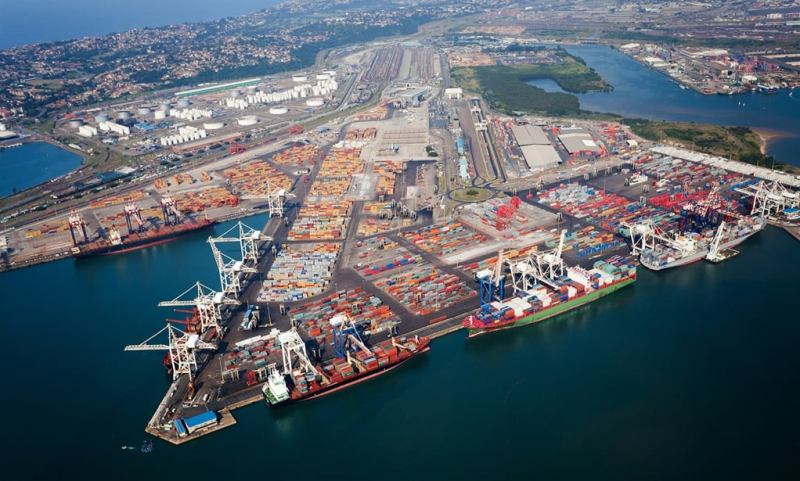
Space availability on roll-on roll-off vessels out of France and Italy, and the delay of import containers from India and China, continue to pose challenges for original equipment manufacturer (OEM) Manitou Group and the end users it serves across the sub-Saharan region.
A sales representative for the OEM in Johannesburg, Aadir Maharaj, said because of problems at the Port of the Durban, “I have had constraints for the last few months”.
He said Manitou was in constant contact with the relevant lines it uses to get on top of shipping delays, but it isn’t easy.
“At Durban, there is always congestion.
“On a weekly basis, I get an update from them. If it’s not something to do with the weather , it’s actual congestion because of gantries that are down, affecting loading.”
He said there was some comfort to be had on the landside, once imports had been received , through third-party road freight service providers responsible for moving items to their final destination, often cross-border towards the Copperbelt.
Be that as it may, Manitou, which has seen significant brand growth across the regional mining sector, is still committed to honouring delivery timelines – a difficult undertaking when machines were idling at the port, Maharaj said.
“Certain machines are under time constraints because certain mines have certain time periods to get them here.”
He said if it was straight from Manitou’s factories in France and Italy, they had to answer for getting equipment to the port and from there up to Johannesburg. The same applies for inbound Manitou imports from India and China.
“Mines have specific projects that they need to start and finish, so they have specific time frames to work within.
“There is machinery that they need in a certain period. For those types of machinery, we have to keep talking to the shipping lines to see where the shipments are and relay that information back to our customers.”