
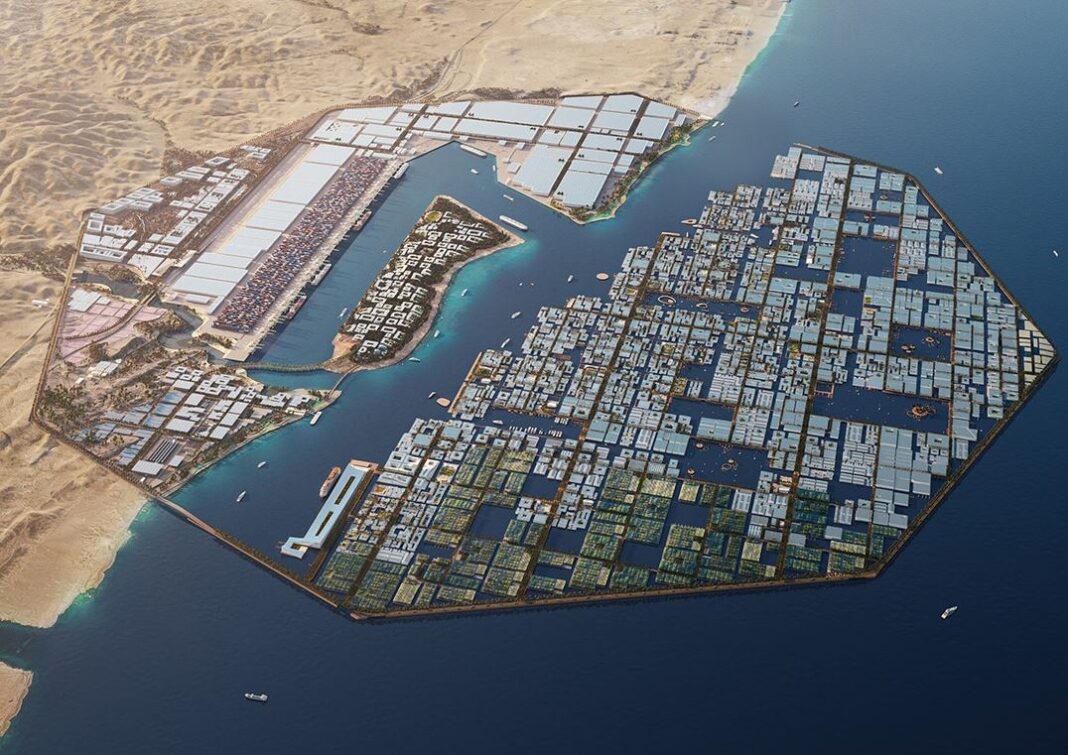
The Port of NEOM has received Saudi Arabia’s first fully automated ship-to-shore (STS) and electric rubber-tyred gantry (RTG) cranes, advancing its goal to become a global hub for smart, sustainable trade.
The newly arrived cranes support the port’s automation strategy, enabling high-efficiency, high-volume operations.
Their remote-control capability also supports a future-ready workforce model with off-site operation.
Development continues ahead of the 2026 launch of Terminal 1, with recent milestones including a 900-metre quay wall and deepening of the port channel to 18.5 metres, allowing the world’s largest vessels to call at the port.
Terminal 1 will include horizontal transport automation, supporting the port’s goal of full automation.
Once operational, these technologies will boost logistics capacity, drive regional growth, improve supply chain resilience, and open access to global markets.
Sean Kelly, Managing Director of Port of NEOM, said: “The arrival of our first automated cranes marks a tangible milestone as we lay the foundations for an advanced, future-ready port.
“We’re not only accelerating industrial growth in northwest Saudi Arabia, we’re setting a new benchmark for performance, efficiency, innovation and establishing a vital trade gateway for the Kingdom and the region beyond.”
In May, Mediterranean Shipping Company (MSC) became the first shipping line to deploy ultra-large container vessels with a capacity of 24,000 TEU on the African continent.