
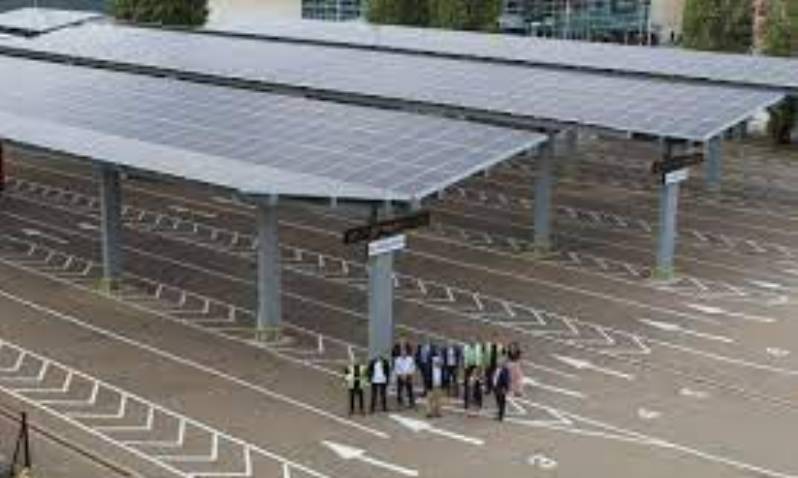
The Port of Valencia has disclosed that 18 per cent of its total energy consumption is powered by renewable solar energy.
This is thanks to the installation of a new photovoltaic system on the vehicle silo at Valencia Terminal Europa (VTE), which alone generates 15 per cent of the port’s daily energy needs.
Additionally, the solar plant at Muelle Príncipe Felipe contributes another 3 per cent, bringing the total sustainable energy supply for the port to 18 per cent.
This move is part of the Port Authority of Valencia (PAV)’s broader decarbonisation efforts aimed at reducing emissions and enhancing the port’s environmental impact.
PAV has a 20 kilovolt (kV) Medium Voltage network, which distributes electrical energy inside the Port of Valencia for its concessionaires, as well as for the PAV’s own purposes.
Specifically, this installation will create around 8,380.00 megawatts per hour/year (MWh/year), making it a new milestone in the zero emissions plan, since it marks a further step towards the eventual target of transforming the Port of Valencia into a 100 per cent green enclosure.
Federico Torre, PAV’s Head of Energy Transition, said that with the commissioning of this second solar plant “it has been observed that, in the central hours of the day, the installation generates more energy than the port precinct consumes.
“For this reason, we are considering storing the energy that is not consumed, and which is now being fed into the electricity grid.”
Recently, PAV reported that China and the United States were its primary commercial partners in 2024, contributing 34 per cent of total traffic.