
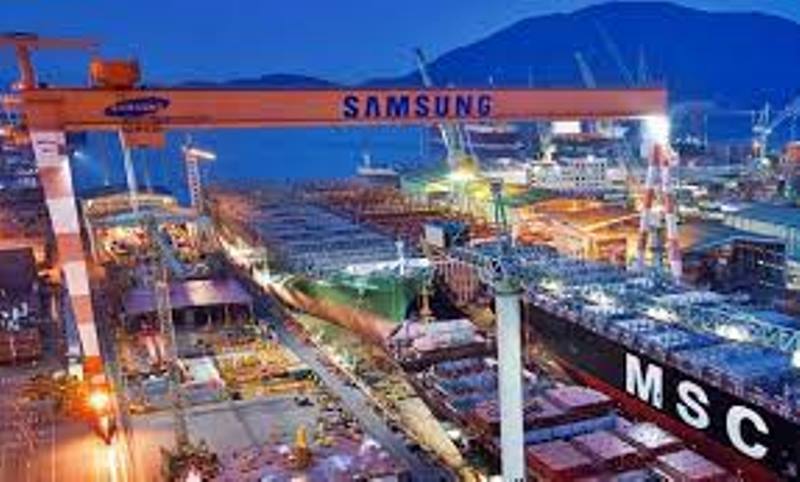
Samsung Heavy Industries announced on Nov. 7, that it has secured an order for two crude oil tankers worth 290.1 billion won from a North American shipowner. These vessels are scheduled to be delivered to the shipowner sequentially by January 2029.
With this contract, Samsung Heavy Industries has secured a total of $5.6 billion (approximately 8.1334 trillion won) in orders.
A Samsung Heavy Industries official explained, “Of the $5.6 billion in orders, merchant vessels account for $4.8 billion, achieving 83% of our annual target of $5.8 billion, and in the offshore sector, following the $800 million offshore production facility preliminary work contract, we recently received a Letter of Agreement (LOA) from Delfin in the United States, so we expect to achieve our target without difficulty.”
By vessel type, the total comprises 32 vessels: 7 liquefied natural gas (LNG) carriers, 9 shuttle tankers, 2 container ships, 2 ethane carriers, 11 crude oil tankers, and one offshore production facility preliminary work contract. The current order backlog stands at $26.9 billion for 125 vessels.
A Samsung Heavy Industries official stated, “Demand for replacing aging crude oil tankers is expected to continue,” adding, “We will actively respond to market conditions by establishing a flexible production system through cooperation with domestic and international shipyards.”